
Christmas Charcuterie Board: 5 Easy Steps
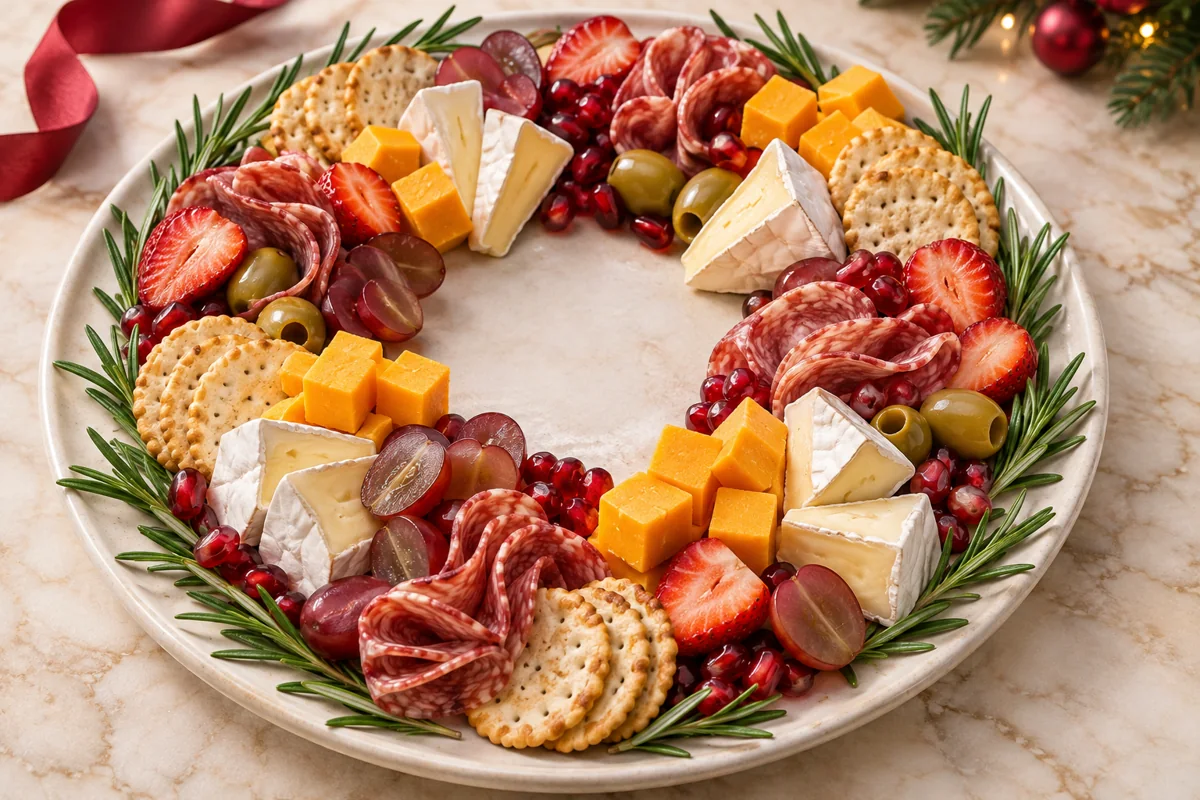
Make christmas charcuterie board with the five-step method below, measured ingredients, texture cues and a printable recipe card. This quantity is intended as eight appetizer servings alongside other food, not eight complete dinners.
Quick recipe answer
For christmas charcuterie board, plan 25 minutes of preparation, 0 minutes of cooking or active heating, and 0 minutes of cooling, resting or chilling. The stated batch makes 8 appetizer servings. Follow the visual and temperature cues in the method alongside the time range, and include the resting period when planning when to serve.
On this page
Ingredients for christmas charcuterie board
For one batch of christmas charcuterie board, measure 8 ounces cheddar cheese, cubed; 8 ounces Brie, cut into small wedges; 6 ounces sliced salami; 1 cup red seedless grapes, halved; 1 cup strawberries, hulled and halved; 1/2 cup pomegranate arils; 1/2 cup pitted green olives, drained; 4 ounces ready-to-eat crackers; 1/4 cup fresh rosemary sprigs, for removable decoration. The complete card repeats these quantities for convenient cooking; keep any divided portions separate until their step.
This is an assembly recipe with fixed shopping quantities, not a requirement to fill every empty space. A board that is smaller than expected can be replenished from the refrigerator. Avoid stacking so much food that guests cannot pick up a portion cleanly.
Dry the washed fruit before placing it beside cheese or crackers. Water on grapes and strawberries travels across the board and softens crisp foods. Keep pitted olives drained and use a separate utensil so brine does not wet other ingredients.
Fresh rosemary gives the outline of a wreath but its woody stems are not intended to be eaten. Keep sprigs visible around the edge and remove them from individual portions. Do not replace them with florist greenery or non-food-safe decorations touching the food.
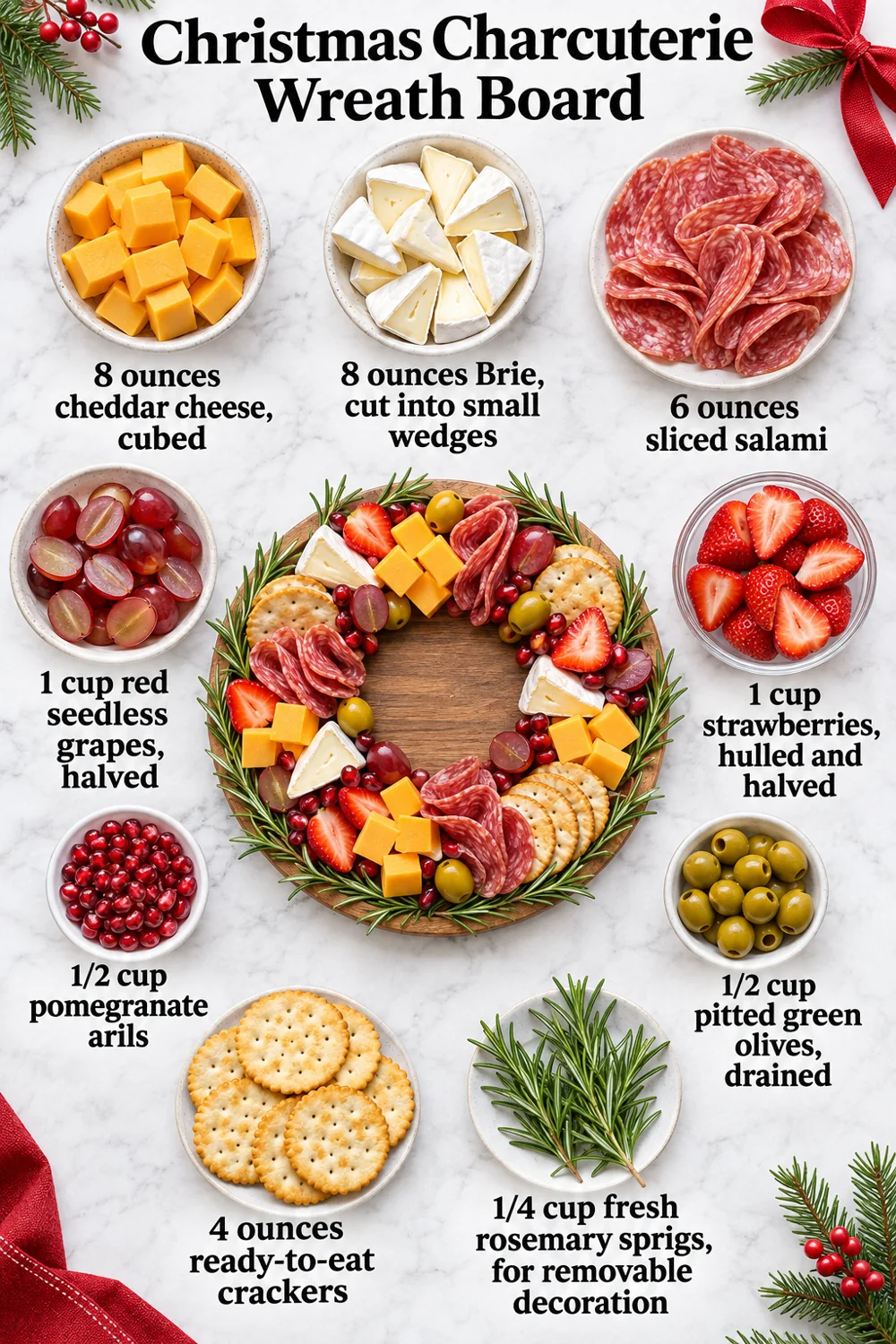
How to make christmas charcuterie board
The christmas charcuterie board method is written in connected steps here as well as in the final recipe card. Read all five steps before starting so the next ingredient, pan or cooling space is ready when needed.
Step 1
Clean and dry the board, knife and serving utensils. Wash the grapes and strawberries under running water and dry well. Halve the fruit, cube the cheddar, cut the Brie and drain the olives.
Step 2
Place a small empty bowl temporarily in the middle of the board to mark the open center of the wreath. Arrange the cheeses in groups around that center, leaving room for the remaining foods.
Step 3
Fold the salami slices and tuck them between cheese groups. Add grapes, strawberries and olives in separate small clusters, distributing red and green colors around the circle.
Step 4
Scatter the measured pomegranate arils into small gaps. Place crackers in a separate dry section of the board so wet fruit does not soften them. Remove the center bowl and add rosemary around the outside as removable decoration.
Step 5
Serve promptly with clean utensils for the different foods. Remove woody rosemary stems before eating and keep refrigerated reserve meat and cheese off the board until needed. Replenish in small portions rather than leaving the entire reserve at room temperature.
Planning christmas charcuterie board
Choose a board that fits inside your refrigerator or assemble the food on a removable platter. Wash produce, dry it well and keep meats and cheeses cold while arranging the remaining items. A decorative layout is easiest to adjust before the food warms. Set out separate small containers for the measured portions so every item has a place.
Build the shape with a few larger groups, then fill the gaps with smaller foods. Keep wet fruit and olives from soaking crackers; placing them in separate areas protects the crisp texture. Wash the knife and cutting board between foods as needed, and use a clean serving utensil for each component that guests cannot easily pick up.
Treat the finished board as perishable food rather than a room decoration. Keep a smaller portion on the table and store reserve ingredients covered in the refrigerator. Replace the platter with a fresh chilled one instead of repeatedly topping up food that has been sitting out. Remove decorative herb stems before anyone eats them.
Prepare the components that keep well first and finish the texture-sensitive assembly near serving. Label any covered containers so measured ingredients are not mistaken for another recipe. Allow refrigerator space for the full batch, and choose serving vessels before guests arrive. Keep decorations and drinks separate until their final preparation step.
Christmas charcuterie board: texture tips
If the board looks crowded, hold back some crackers and fruit rather than making a second layer. Negative space helps guests see the wreath shape and separate the foods. A few small groupings are easier to serve than tightly packed decorative folds.
If crackers become soft, replace only that small section from the dry reserve. Do not mix damp crackers back into their package. Keep them away from fruit cut surfaces and any liquid left by olives.
If using a board with deep knife marks or difficult-to-clean cracks, choose a clean washable platter instead. Food-safe presentation matters more than rustic styling. Keep separate utensils available for guests who need to avoid a particular ingredient.
Storing christmas charcuterie board
Keep meat and cheese refrigerated until assembly. Refrigerate perishable leftovers within two hours, or one hour above 90°F (32°C), and follow the shortest applicable package storage date. Do not return food repeatedly handled on the board to unopened reserve containers.
For perishable ingredients, keep the refrigerator at 40°F (4°C) or below and limit time at room temperature to two hours, or one hour above 90°F (32°C). Use clean utensils and follow ingredient labels. See FoodSafety.gov’s preparation guidance for the general handling principles behind a safe holiday cooking routine.
Serving christmas charcuterie board
This quantity is intended as eight appetizer servings alongside other food, not eight complete dinners. Label meat, dairy, wheat-containing crackers and any product-specific allergens. The wreath shape supplies the Christmas theme without adding inedible ornaments to the board.
Tools used in this recipe
For christmas charcuterie board, set out: large clean round board, small bowl, knife, separate serving utensils. Check the pan dimensions and clear a heatproof working surface before beginning. Having the correct pan or serving bowl ready avoids transferring a hot or partially mixed recipe halfway through the method.
Measure small ingredients with proper measuring spoons rather than an eating spoon. Level dry measures and read liquid measures at eye level. Keep one clean spatula or spoon aside for the finished food, especially if another utensil touched raw ingredients. A small written checklist helps when making more than one holiday recipe at the same time.
The equipment list describes tools needed for the method; it is not a requirement to buy a particular brand. The Crispe Kitchen cooking guides are a useful place to continue planning the rest of the meal. Use the original batch size when working out oven or refrigerator space, even if you later divide the finished portions into smaller servings.
Choose a platter with enough empty center space for the wreath shape. Arrange repeated groups of cheese and salami around an imaginary ring, then add the red fruit and green olives between them. Repetition makes a simple board look intentional without requiring special cutters or extra food. Keep the measured crackers in drier gaps rather than directly under cut strawberries or drained olives.
The rosemary is removable decoration, not a bed of branches to chew through with each bite. Use only the listed culinary herb and keep it clearly separate from food portions; do not substitute decorative Christmas greenery. Place a small waste bowl or plate nearby for stems. The finished board is an appetizer for eight, so portion the ingredients with the rest of the meal in mind instead of treating it as eight complete dinners.
Questions about christmas charcuterie board
Can I make the board the night before?
Prepare the cheese and washed dried fruit separately and refrigerate them covered. Assemble close to serving and keep crackers dry until the end. A fully assembled uncovered board can dry out or collect moisture overnight.
Can I make it without salami?
Yes, but that becomes a meat-free variation and the amount of other food may need adjustment for the same serving plan. Keep ingredients separated and use clean tools rather than removing salami after it has touched everything.
Is the rosemary edible decoration?
The rosemary is a food herb, but the whole woody sprigs are removable decoration in this board. Guests should not chew the stems. Do not use decorative evergreen branches from a garden or florist in place of the listed rosemary.
Do I need an expensive wooden board?
No. A clean food-safe platter or removable tray works well, especially if it fits in the refrigerator. The important features are enough space for the ring and a surface that can be washed properly. If using a decorative board, confirm that it is intended for food contact. Do not place cut fruit and cheese directly on painted craft wood or an unverified holiday decoration.
Can I assemble the entire board the night before?
Prepare and cover separate components ahead, but add crackers and finish the fruit arrangement nearer serving. Moisture from cut produce can soften crackers during long contact. Keep meats and cheeses refrigerated and follow their package storage guidance. A component approach also lets you refresh the wreath without handling every item again when carrying it from the refrigerator to the table.
How can I identify ingredients for guests?
Keep package information available and use a small written list of the cheeses, meat, crackers and fruit. The board contains dairy and likely wheat, and the exact allergen details depend on the purchased products. Do not label the whole arrangement gluten-free or suitable for an allergy without checking every item and preparation surface. Separate serving utensils help guests take the foods they intend to choose.
Find this recipe in 6 Christmas Appetizer Board Recipes and Bites.
Christmas Charcuterie Wreath Board
Yield: 8 appetizer servings
Prep: 25 minutes · Cook/heating: 0 minutes · Cooling/rest/chilling: 0 minutes
Equipment: large clean round board, small bowl, knife, separate serving utensils
Ingredients
- 8 ounces cheddar cheese, cubed
- 8 ounces Brie, cut into small wedges
- 6 ounces sliced salami
- 1 cup red seedless grapes, halved
- 1 cup strawberries, hulled and halved
- 1/2 cup pomegranate arils
- 1/2 cup pitted green olives, drained
- 4 ounces ready-to-eat crackers
- 1/4 cup fresh rosemary sprigs, for removable decoration
Instructions
- Clean and dry the board, knife and serving utensils. Wash the grapes and strawberries under running water and dry well. Halve the fruit, cube the cheddar, cut the Brie and drain the olives.
- Place a small empty bowl temporarily in the middle of the board to mark the open center of the wreath. Arrange the cheeses in groups around that center, leaving room for the remaining foods.
- Fold the salami slices and tuck them between cheese groups. Add grapes, strawberries and olives in separate small clusters, distributing red and green colors around the circle.
- Scatter the measured pomegranate arils into small gaps. Place crackers in a separate dry section of the board so wet fruit does not soften them. Remove the center bowl and add rosemary around the outside as removable decoration.
- Serve promptly with clean utensils for the different foods. Remove woody rosemary stems before eating and keep refrigerated reserve meat and cheese off the board until needed. Replenish in small portions rather than leaving the entire reserve at room temperature.
Recipe notes
This is an assembly recipe with fixed shopping quantities, not a requirement to fill every empty space. A board that is smaller than expected can be replenished from the refrigerator. Avoid stacking so much food that guests cannot pick up a portion cleanly.