
Gingerbread Latte: 5 Easy Steps
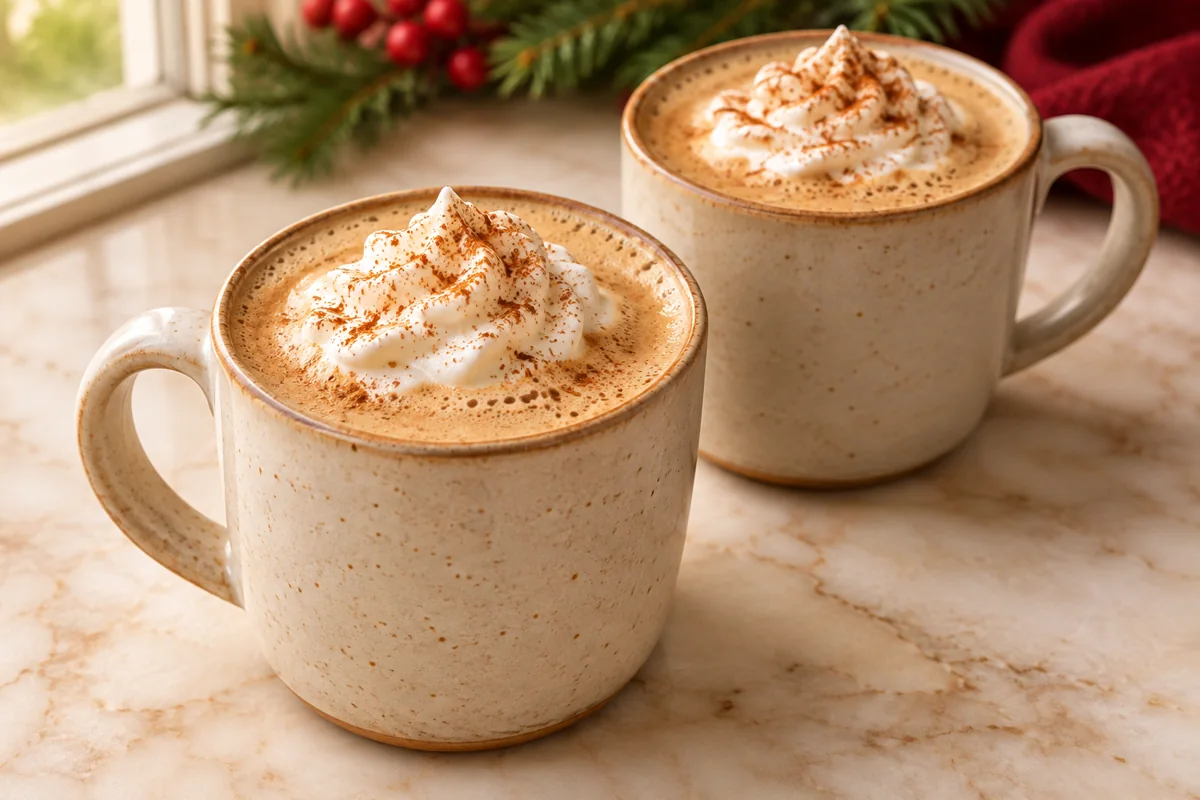
Make gingerbread latte with the five-step method below, measured ingredients, texture cues and a printable recipe card. Serve in two mugs with a modest cream topping and the measured cinnamon dusting.
Quick recipe answer
For gingerbread latte, plan 5 minutes of preparation, 5 minutes of cooking or active heating, and 0 minutes of cooling, resting or chilling. The stated batch makes 2 drinks. Follow the visual and temperature cues in the method alongside the time range, and include the resting period when planning when to serve.
On this page
Ingredients for gingerbread latte
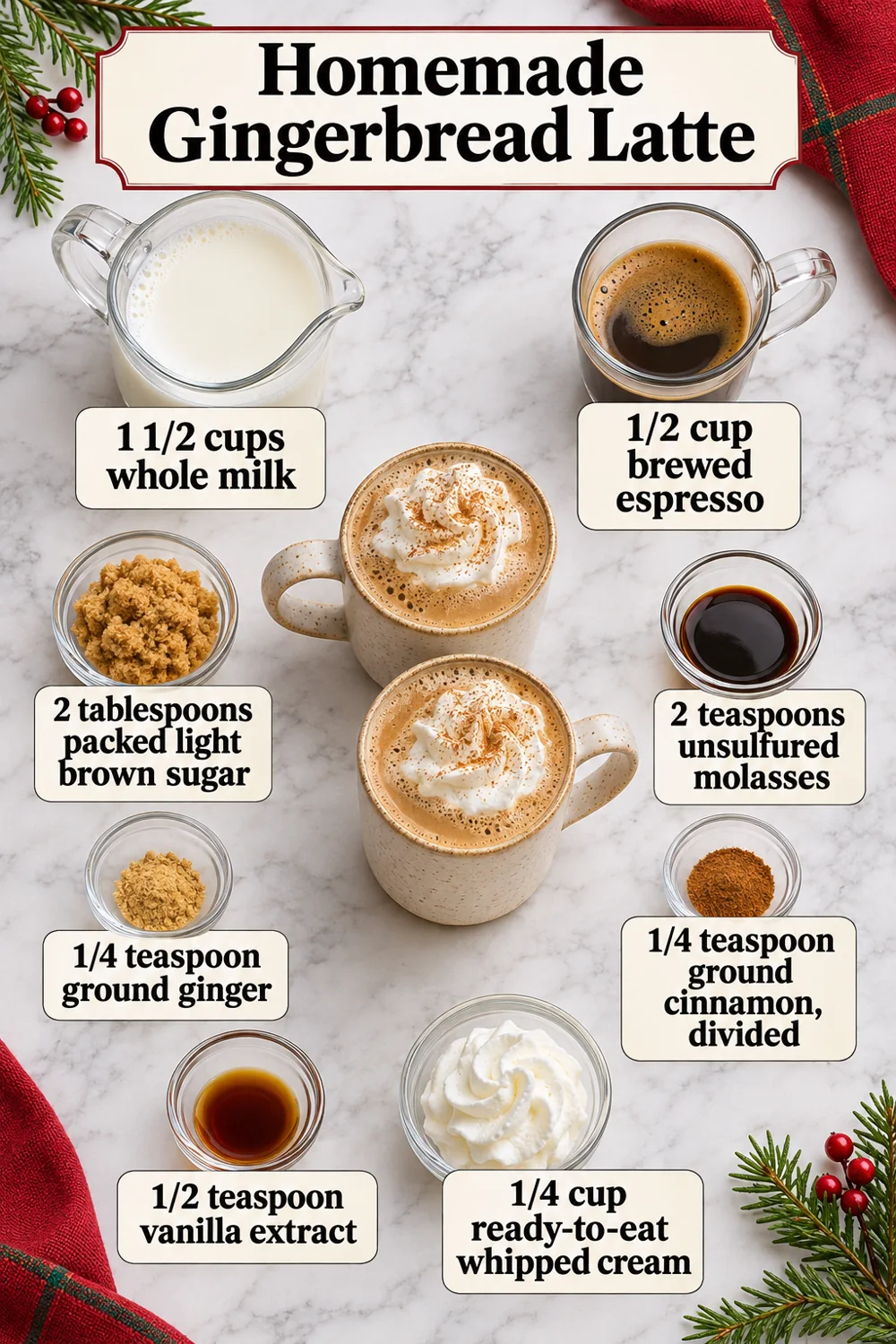
For one batch of gingerbread latte, measure 1 1/2 cups whole milk; 1/2 cup brewed espresso; 2 tablespoons packed light brown sugar; 2 teaspoons unsulfured molasses; 1/4 teaspoon ground ginger; 1/4 teaspoon ground cinnamon, divided; 1/2 teaspoon vanilla extract; 1/4 cup ready-to-eat whipped cream. The complete card repeats these quantities for convenient cooking; keep any divided portions separate until their step.
Unsulfured molasses contributes the gingerbread character without requiring a premade syrup. Blackstrap molasses is more bitter and changes the balance. Measure the two teaspoons rather than pouring a large sticky ribbon directly into the pan.
The cinnamon is divided between the milk and topping. Set aside one eighth teaspoon before heating so the full quarter teaspoon is not used twice. Ground ginger and cinnamon can leave fine particles; whisking disperses them, but it does not make them disappear.
Use brewed espresso measured after preparation. Different machines produce different shot sizes, so a liquid measure keeps the two servings consistent. Strong brewed coffee is a deliberate alternative, not a promise of exactly the same espresso flavor.
How to make gingerbread latte
The gingerbread latte method is written in connected steps here as well as in the final recipe card. Read all five steps before starting so the next ingredient, pan or cooling space is ready when needed.
Step 1
Brew and measure the espresso. Put milk, brown sugar, molasses, ginger and 1/8 teaspoon of the cinnamon in a small saucepan. Keep the remaining 1/8 teaspoon cinnamon aside for the final topping.
Step 2
Warm over medium-low heat for 3–5 minutes, whisking regularly, until the sugar dissolves and the milk is steaming. Keep the heat gentle; the milk should not boil vigorously or scorch on the bottom.
Step 3
Remove from the heat and stir in the vanilla. Whisk briefly to distribute the ground spices, which do not dissolve completely like sugar.
Step 4
Divide the espresso between two heatproof mugs. Pour half of the spiced milk into each and stir gently so the molasses does not remain in a dark layer at the bottom.
Step 5
Divide the whipped cream between the mugs and dust with the reserved cinnamon. Serve warm after allowing a comfortable sipping temperature. Do not add an unlisted cookie, caramel drizzle or extra spice blend to the pictured version.
Planning gingerbread latte
Measure the ingredients before turning on the heat. Cocoa and chocolate combine more evenly when they are introduced in the order described, while flavor extracts are easiest to control in properly measured small quantities. Choose a pan or cooker with enough headroom to stir without splashing hot liquid over the side.
Heat gently and stir along the bottom and corners, where chocolate and milk solids can collect. Do not use a rolling boil as the readiness test for a milk-based drink. A smoother surface and fully melted chocolate are more useful cues. If the method calls for an extract at the end, add it after the heating stage as written.
Use heat-safe mugs and leave enough space for the measured topping. Pour away from people and keep handles easy to grasp. If holding a batch for guests, monitor the temperature rather than assuming a warm appliance remains food-safe. Refrigerate leftovers promptly and reheat only the portion needed, stirring carefully to restore an even texture.
Check when the cooker, stove or serving station will be available before starting the batch. Keep ingredients refrigerated until preparation and leave a clear heatproof place for the finished vessel. If guests arrive at different times, portion carefully and monitor safe holding rather than repeatedly cooling and reheating the entire batch.
Gingerbread latte: texture tips
If dark syrup sits in the bottom of the mug, stir the molasses into the warm milk thoroughly before serving. A final gentle stir after combining with espresso helps distribute it.
If the spice feels gritty, check that the ground spices are fine and free of lumps. Whisk them into the milk before it becomes hot. Adding a large mound of spice directly to the finished mug creates stronger gritty pockets.
If the milk boils over, lower the heat and use a pan with more headroom next time. This drink needs warming, not a rolling boil. Stay beside the pan while heating rather than treating five minutes as unattended time.
Storing gingerbread latte
Prepare fresh when possible. Refrigerate unused spiced milk promptly in a clean covered container and use within two days, keeping espresso and toppings separate. Rewarm gently while stirring and use fresh coffee for the next serving.
For perishable ingredients, keep the refrigerator at 40°F (4°C) or below and limit time at room temperature to two hours, or one hour above 90°F (32°C). Use clean utensils and follow ingredient labels. See FoodSafety.gov’s preparation guidance for the general handling principles behind a safe holiday cooking routine.
Serving gingerbread latte
Serve in two mugs with a modest cream topping and the measured cinnamon dusting. The ginger and molasses supply the holiday flavor. This is a homemade recipe without an official coffee-chain affiliation or a claim to reproduce a proprietary syrup.
Tools used in this recipe
For gingerbread latte, set out: small saucepan, whisk, coffee maker, measuring spoons, two heatproof mugs. Check the pan dimensions and clear a heatproof working surface before beginning. Having the correct pan or serving bowl ready avoids transferring a hot or partially mixed recipe halfway through the method.
Measure small ingredients with proper measuring spoons rather than an eating spoon. Level dry measures and read liquid measures at eye level. Keep one clean spatula or spoon aside for the finished food, especially if another utensil touched raw ingredients. A small written checklist helps when making more than one holiday recipe at the same time.
The equipment list describes tools needed for the method; it is not a requirement to buy a particular brand. The Crispe Kitchen cooking guides are a useful place to continue planning the rest of the meal. Use the original batch size when working out oven or refrigerator space, even if you later divide the finished portions into smaller servings.
Use unsulfured molasses for this latte, measuring two teaspoons for the two-serving batch. It contributes the darker gingerbread note alongside brown sugar, ground ginger and cinnamon. Blackstrap molasses has a much stronger taste and is not the same flavor substitution. Stir the sticky molasses into the warming milk until no dark streaks remain, instead of letting most of it sit on the measuring spoon or pan bottom.
The quarter teaspoon of cinnamon is divided between the milk mixture and the finish: one eighth teaspoon goes into the drink base and the other eighth is dusted over the measured whipped cream. Ground ginger belongs in the base, not as an extra spoonful scattered on top. Preparing two small spice portions before heating helps prevent using the full cinnamon amount twice or overlooking the finishing dusting.
This is a flavored milk-and-espresso drink, not hot chocolate or a blended cookie dessert. The half cup of espresso and one and a half cups of milk are shared between two mugs. Use the measured quarter cup of ready-to-eat whipped cream for both toppings together. No gingerbread person, biscuit crumble or caramel drizzle is part of this formula, so the finished drink can be prepared from the ingredients actually listed.
Questions about gingerbread latte
Can I omit molasses?
Leaving it out changes the gingerbread flavor. Brown sugar alone gives sweetness but not the same depth. If you deliberately omit molasses, describe the drink as a variation rather than claiming it matches the full recipe.
Can I use a gingerbread spice blend?
A blend contains its own ratios of ginger, cinnamon and other spices. It is not automatically equal to the measured ingredients here. Use the separate spices for this version so the card and ingredient image remain accurate.
Can I make it with decaf espresso?
Yes. Use the same half cup of brewed decaf espresso for two drinks. Keep the measured milk, sugar, molasses and spices unchanged. Decaf choice affects coffee selection, not the gingerbread syrup proportions.
Will ground spices dissolve completely?
Ground ginger and cinnamon disperse through the milk but do not dissolve like sugar. Whisk thoroughly while warming and stir the base again before dividing it between mugs. Some very fine settling is normal. Do not keep boiling the milk in an attempt to make every spice particle disappear, because stronger heat can damage the dairy flavor without solving the nature of ground spices.
Can I use a gingerbread spice blend?
A blend contains a different mixture and may include cloves, nutmeg or other spices absent from this formula. It is a deliberate variation, not an exact replacement for the listed ginger and cinnamon. Start with the written spices if you want to reproduce this version. Read any purchased blend label before serving it to guests and keep its extra ingredients out of the reference image unless the recipe is revised.
How should I divide the coffee and topping?
Split the half cup of espresso evenly, giving each mug a quarter cup, then divide the warmed spiced milk between them. The quarter cup of whipped cream means about two tablespoons per mug, with the reserved cinnamon shared over both. Leave room below the rim before decorating. These measures keep the two servings similar rather than allowing the first mug to receive most of the coffee or cream.
Can I prepare the milk mixture in advance?
You can make the spiced base separately, cool it promptly and refrigerate it covered. Stir and reheat the portion needed thoroughly before combining it with freshly prepared espresso. Keep the whipped topping refrigerated and add it near serving. A fully decorated stored latte will not retain the same foam, spice distribution or fresh coffee aroma, so component preparation is the more useful make-ahead approach.
Homemade Gingerbread Latte
Yield: 2 drinks
Prep: 5 minutes · Cook/heating: 5 minutes · Cooling/rest/chilling: 0 minutes
Equipment: small saucepan, whisk, coffee maker, measuring spoons, two heatproof mugs
Ingredients
- 1 1/2 cups whole milk
- 1/2 cup brewed espresso
- 2 tablespoons packed light brown sugar
- 2 teaspoons unsulfured molasses
- 1/4 teaspoon ground ginger
- 1/4 teaspoon ground cinnamon, divided
- 1/2 teaspoon vanilla extract
- 1/4 cup ready-to-eat whipped cream
Instructions
- Brew and measure the espresso. Put milk, brown sugar, molasses, ginger and 1/8 teaspoon of the cinnamon in a small saucepan. Keep the remaining 1/8 teaspoon cinnamon aside for the final topping.
- Warm over medium-low heat for 3–5 minutes, whisking regularly, until the sugar dissolves and the milk is steaming. Keep the heat gentle; the milk should not boil vigorously or scorch on the bottom.
- Remove from the heat and stir in the vanilla. Whisk briefly to distribute the ground spices, which do not dissolve completely like sugar.
- Divide the espresso between two heatproof mugs. Pour half of the spiced milk into each and stir gently so the molasses does not remain in a dark layer at the bottom.
- Divide the whipped cream between the mugs and dust with the reserved cinnamon. Serve warm after allowing a comfortable sipping temperature. Do not add an unlisted cookie, caramel drizzle or extra spice blend to the pictured version.
Recipe notes
Unsulfured molasses contributes the gingerbread character without requiring a premade syrup. Blackstrap molasses is more bitter and changes the balance. Measure the two teaspoons rather than pouring a large sticky ribbon directly into the pan.