
Gingerbread Pancakes
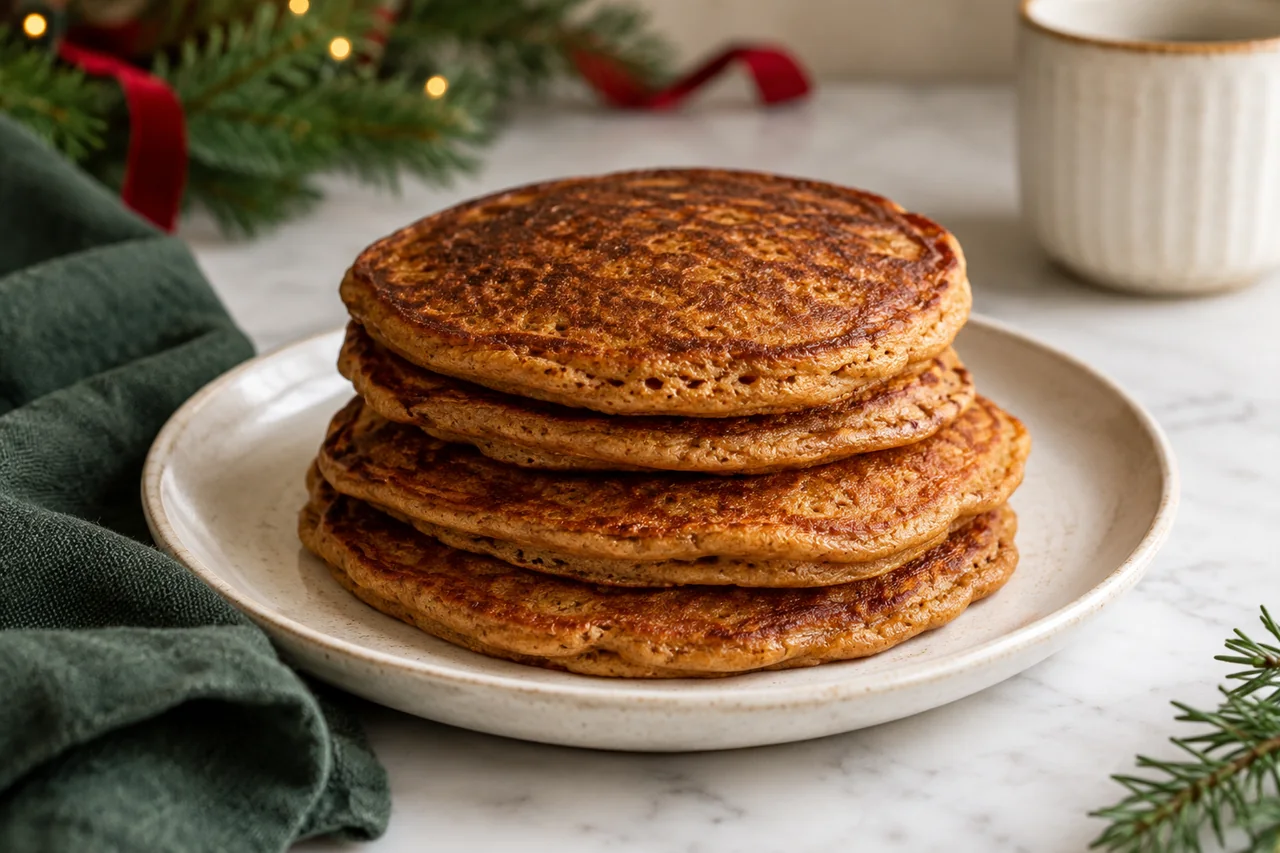
Gingerbread pancakes bring ginger, cinnamon and molasses to a small Christmas breakfast stack. Mix the batter gently, rest it briefly and cook small pancakes over moderate heat so the centers finish before the outside becomes too dark.
On this page
Ingredients for gingerbread pancakes
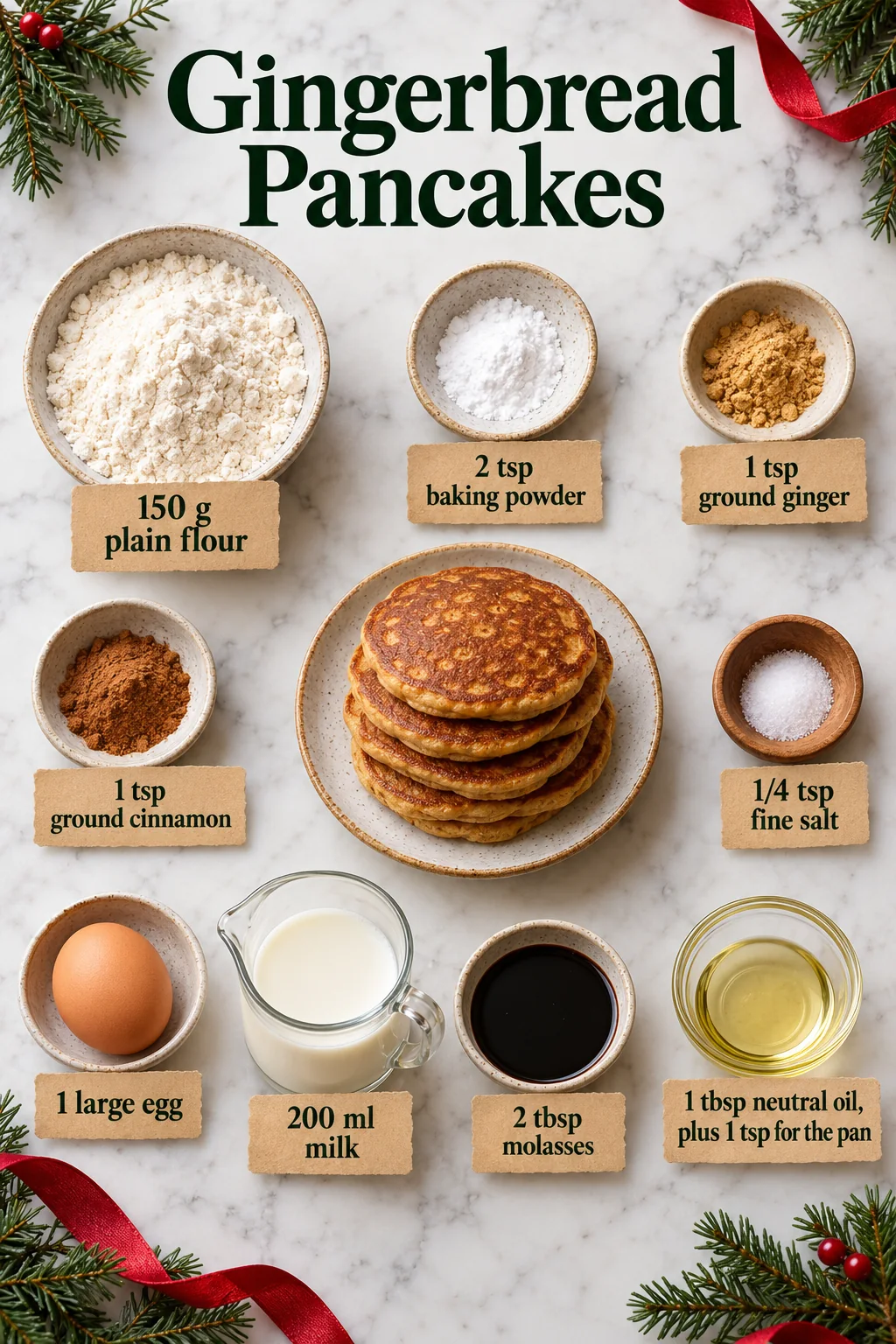
For gingerbread pancakes, measure 150 g plain flour; 2 tsp baking powder; 1 tsp ground ginger; 1 tsp ground cinnamon; 1/4 tsp fine salt; 1 large egg; 200 ml milk; 2 tbsp molasses; 1 tbsp neutral oil, plus 1 tsp for the pan.
How to make gingerbread pancakes
The following method makes 3 servings; about 10 small pancakes; 3 servings.
Whisk flour, baking powder, ginger, cinnamon and salt in a bowl. In another bowl, whisk egg, milk, molasses and 1 tbsp oil. Stir the wet mixture into the dry ingredients just until no dry flour remains, then rest for 5 minutes.
Warm the pan over medium-low heat and lightly coat it with the remaining 1 tsp oil. Add small portions of batter, leaving room to turn them. Cook until bubbles appear and the edges begin to set, about 2–3 minutes. Turn and cook the second side for about 1–2 minutes, until the centers are fully cooked with no wet batter.
Repeat with the remaining batter, adjusting the heat if the molasses darkens too quickly. Serve the cooked pancakes warm.
Tips for gingerbread pancakes
Molasses gives the pancakes both flavor and a darker color than a plain pancake. Use the cooked center and set edges as cues instead of waiting for a very dark surface.
Small pancakes are easier to flip than plate-sized ones. Keep the batter portions consistent so the batch cooks at a similar pace.
A few small lumps are fine. Vigorous mixing after the flour is wet can make the pancakes less tender.
If the first pancake darkens before bubbles form, reduce the heat before starting the rest of the batch. Wipe away any dark residue with care between rounds.
Questions about gingerbread pancakes
Why are my pancakes dark before they are cooked?
Molasses browns readily. Reduce the pan heat and make smaller pancakes so the middle can cook through.
Should I mix the batter completely smooth?
No. Stop when the dry flour disappears; a few small lumps are normal.
Can I make large pancakes?
The batter is easier to turn in small portions. Larger pancakes need more careful heat control and may take longer.
Storage and make-ahead tips
Cool leftovers promptly and refrigerate in a covered container for up to 3 days. Reheat until hot throughout. Separate fully cooled pancakes before freezing portions.
Food-safety reference: FDA flour safety guidance.
Plan your Christmas menu
Browse more christmas breakfast, or use the recipe finder to choose by ingredient and cooking time.
For more everyday ideas, try Blender Banana Oat Pancakes or Overnight Oats Without Yogurt.
More recipes you might enjoy
Pumpkin Cranberry Baked Oatmeal Cups
Make pumpkin cranberry recipes with separate human and dog formulas, measured ingredients, clear methods and portion guidance.
Read full article →
Apple Oat Scones
Make apple oat recipes with separate human and dog formulas, measured ingredients, clear methods and portion guidance.
Read full article →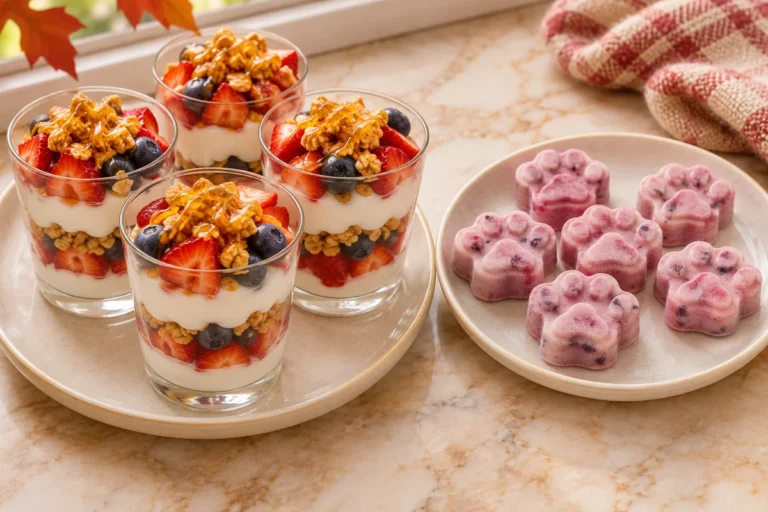
Berry Yogurt Parfaits
Make christmas yogurt recipes with separate human and dog formulas, measured ingredients, clear methods and portion guidance.
Read full article →Gingerbread Pancakes
3 servings; About 10 small pancakes; 3 servings
Prep: 15 minutes · Cook: 15 minutes · Rest/chill: 5 minutes
Equipment: Mixing bowls, whisk, nonstick frying pan, spatula
Ingredients
- 150 g plain flour
- 2 tsp baking powder
- 1 tsp ground ginger
- 1 tsp ground cinnamon
- 1/4 tsp fine salt
- 1 large egg
- 200 ml milk
- 2 tbsp molasses
- 1 tbsp neutral oil, plus 1 tsp for the pan
Instructions
- Whisk flour, baking powder, ginger, cinnamon and salt in a bowl.
- In another bowl, whisk egg, milk, molasses and 1 tbsp oil. Stir the wet mixture into the dry ingredients just until no dry flour remains, then rest for 5 minutes.
- Warm the pan over medium-low heat and lightly coat it with the remaining 1 tsp oil. Add small portions of batter, leaving room to turn them.
- Cook until bubbles appear and the edges begin to set, about 2–3 minutes. Turn and cook the second side for about 1–2 minutes, until the centers are fully cooked with no wet batter.
- Repeat with the remaining batter, adjusting the heat if the molasses darkens too quickly. Serve the cooked pancakes warm.
Recipe notes
Molasses gives the pancakes both flavor and a darker color than a plain pancake. Use the cooked center and set edges as cues instead of waiting for a very dark surface. Follow the cooking cues and keep ingredient and equipment sizes consistent with the instructions.