
Christmas Cracker Toffee: 5 Easy Steps
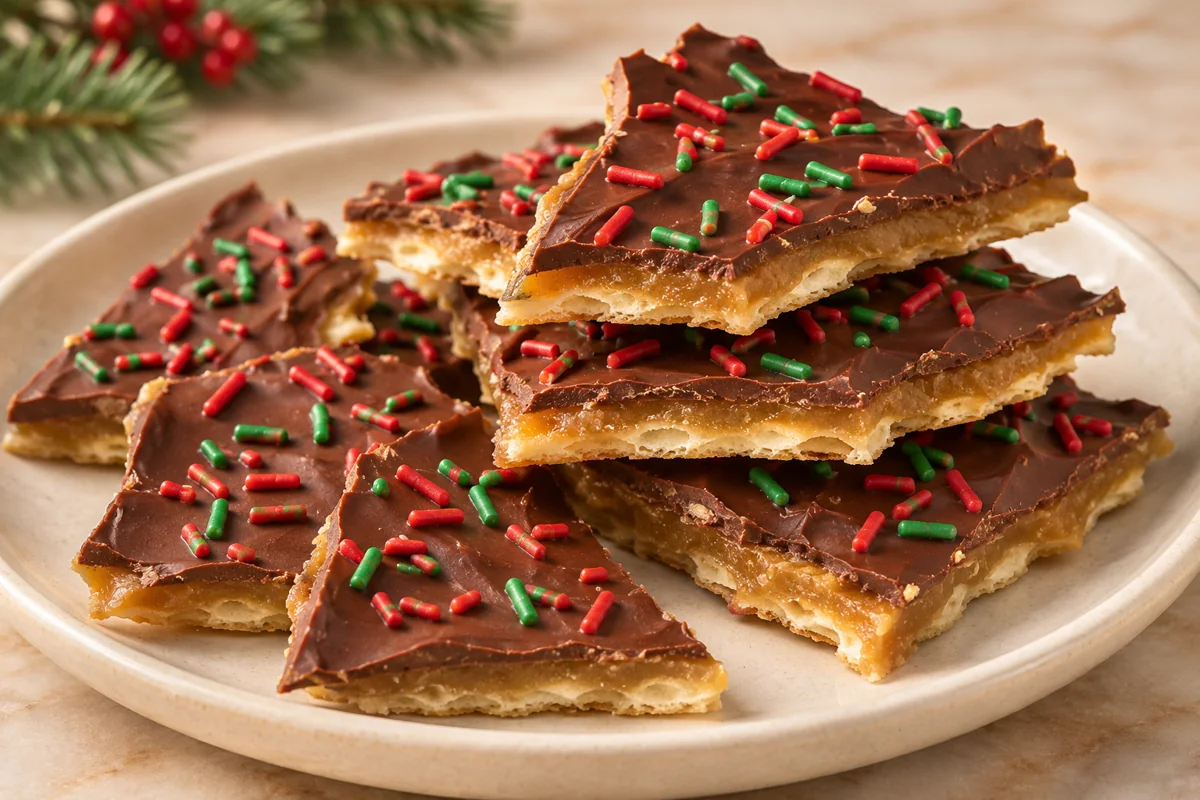
Make christmas cracker toffee with the five-step method below, measured ingredients, texture cues and a printable recipe card. Serve small broken pieces with coffee or a holiday dessert board.
Quick recipe answer
For christmas cracker toffee, plan 10 minutes of preparation, 8 minutes of cooking or active heating, and 90 minutes of cooling, resting or chilling. The stated batch makes 40 pieces. Follow the visual and temperature cues in the method alongside the time range, and include the resting period when planning when to serve.
On this page
Ingredients for christmas cracker toffee
For one batch of christmas cracker toffee, measure 40 saltine crackers; 1 cup unsalted butter; 1 cup packed light brown sugar; 2 cups semisweet chocolate chips; 2 tablespoons red-and-green sprinkles. The complete card repeats these quantities for convenient cooking; keep any divided portions separate until their step.
Saltines create the salty, crisp base. Use a single layer rather than overlapping crackers, because a stacked base separates when broken. Parchment should cover the pan bottom and sides so the molten sugar does not glue the candy to bare metal.
Measure the packed brown sugar before heating the pan. The full boil is the starting point for the three-minute cooking period; melting butter with a few bubbles around the edge is not the same stage. A heavy pan distributes heat more evenly than a thin small pot.
Use ordinary semisweet chocolate chips that melt when warmed. Chocolate labeled for specialty baking may behave differently. Do not add milk to soften chocolate on top of the candy: moisture changes the texture and can make the chocolate seize.
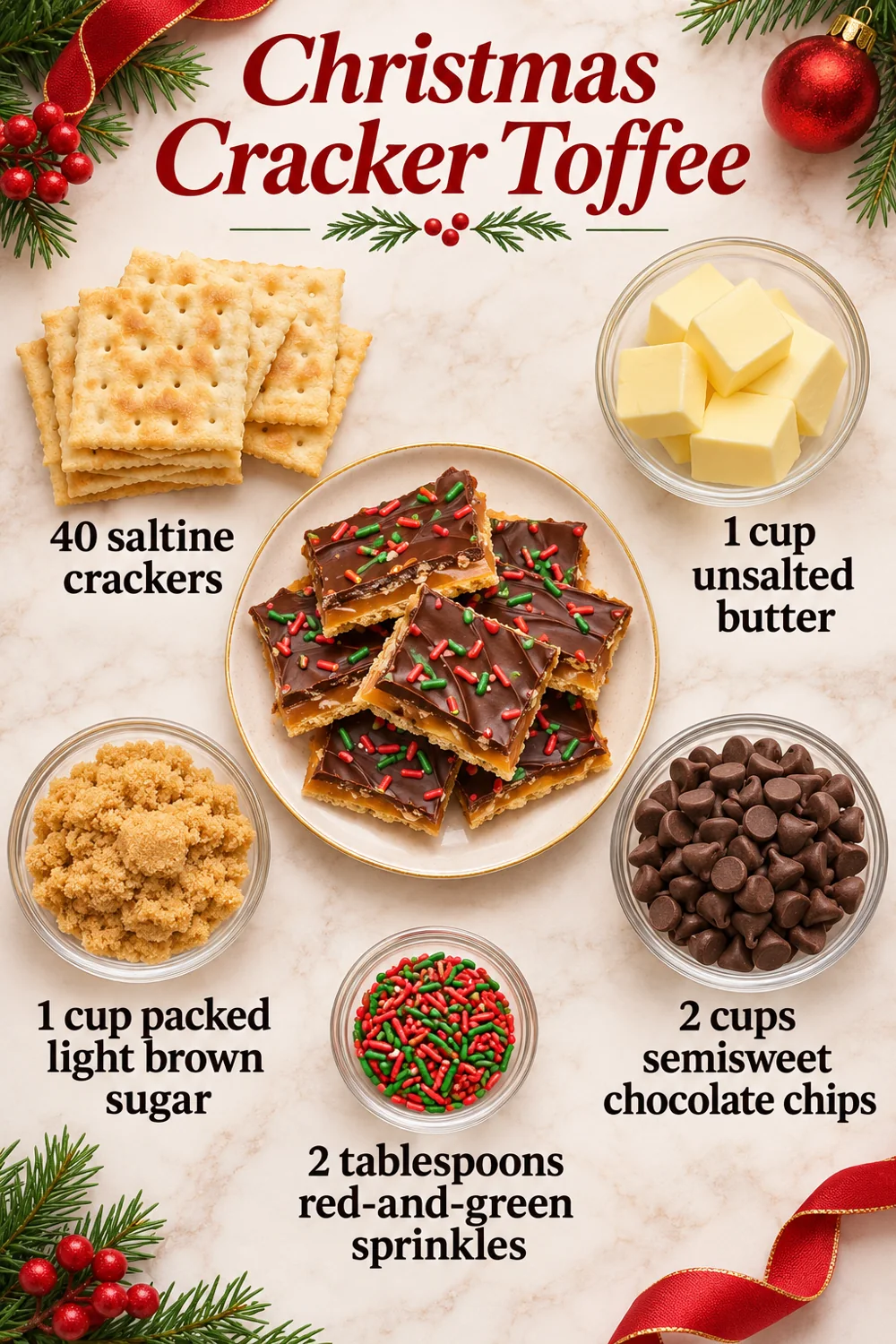
How to make christmas cracker toffee
The christmas cracker toffee method is written in connected steps here as well as in the final recipe card. Read all five steps before starting so the next ingredient, pan or cooling space is ready when needed.
Step 1
Heat the oven to 350°F (175°C). Line a 10 × 15-inch rimmed pan with parchment, leaving enough overhang to lift the candy. Arrange 40 saltines in one close layer; break a few crackers only if needed to fill the edges.
Step 2
Melt the butter and brown sugar together in a heavy saucepan over medium heat, stirring until evenly combined. When the mixture reaches a full bubbling boil across the surface, cook for 3 minutes, stirring gently and continuously. Keep the pan attended and avoid splashing the hot sugar.
Step 3
Pour the hot butter-sugar mixture over the crackers and carefully spread it to the corners. Bake for 5 minutes, until the topping bubbles across the pan. Set the hot pan on a heatproof surface; the sugar mixture can burn skin.
Step 4
Scatter the chocolate chips evenly over the hot toffee. Wait 2 minutes, then spread the softened chocolate into a thin layer. Add the measured sprinkles while the chocolate is still soft.
Step 5
Cool the pan on a rack for 30 minutes, then refrigerate for at least 60 minutes, until the chocolate and toffee are firm. Lift out with the parchment and break into about 40 pieces. Keep the pieces cold until ready to pack or serve.
Planning christmas cracker toffee
Prepare the lined trays, measured toppings and heatproof work surface before heating the mixture. Candy is easier to portion or finish while it is at the correct stage, and stopping to find a container can leave the topping too firm to spread. Use a stable pan or cooker and leave its handles out of the path of anyone walking through the kitchen.
Keep the heating step attended and use dry utensils wherever melted chocolate is involved. A little moisture can change chocolate texture, while hot sugar can stick to skin and cause burns. Move pans with proper oven mitts and let the finished mixture cool before anyone touches or samples it. Keep children away from the hot working area.
Allow enough tray space for the whole batch to set without overlapping. A cool room and a refrigerator are useful for firming chocolate, but the food should not be stacked while it is soft. Test one edge piece before lifting the full batch. For gifts, use food-safe containers with parchment between layers and identify important ingredients such as peanuts.
Make this batch before the busiest part of the holiday cooking day. Once set, the pieces can be divided into gift containers without another oven step. Put labels on boxes before filling them so candy is not handled repeatedly. Keep different batches separated if their ingredients or allergens differ.
Christmas cracker toffee: texture tips
If the surface looks greasy, keep stirring the butter and sugar together over moderate heat before starting the timed boil. Pour an evenly combined mixture over the crackers. A separated mixture cannot be fixed merely by adding more chocolate afterward.
If the chocolate has not softened after two minutes, put the pan back into the switched-off but still warm oven for about one minute, then spread gently. Long additional baking can scorch chocolate, so check rather than walking away.
A soft slab usually needs more chilling before it can be handled. Humid storage can soften the crackers over time. Break the batch only after the center is firm, and separate stacked layers with parchment to protect the chocolate.
Storing christmas cracker toffee
Store in a covered container in the refrigerator and use within one week for a practical home batch plan. For longer keeping, freeze separated layers for up to one month and thaw in the refrigerator. Pack only cold, firm pieces; warm chocolate smears inside a gift bag.
For perishable ingredients, keep the refrigerator at 40°F (4°C) or below and limit time at room temperature to two hours, or one hour above 90°F (32°C). Use clean utensils and follow ingredient labels. See FoodSafety.gov’s preparation guidance for the general handling principles behind a safe holiday cooking routine.
Serving christmas cracker toffee
Serve small broken pieces with coffee or a holiday dessert board. For gifting, line a rigid food-safe container with parchment rather than stacking warm candy in a soft bag. The batch yield describes approximately forty pieces, not forty identical rectangles; weigh portions if consistent gift packs matter.
Tools used in this recipe
For christmas cracker toffee, set out: 10 × 15-inch rimmed jelly-roll pan, parchment, medium heavy saucepan, silicone spatula, offset spatula. Check the pan dimensions and clear a heatproof working surface before beginning. Having the correct pan or serving bowl ready avoids transferring a hot or partially mixed recipe halfway through the method.
Measure small ingredients with proper measuring spoons rather than an eating spoon. Level dry measures and read liquid measures at eye level. Keep one clean spatula or spoon aside for the finished food, especially if another utensil touched raw ingredients. A small written checklist helps when making more than one holiday recipe at the same time.
The equipment list describes tools needed for the method; it is not a requirement to buy a particular brand. The Crispe Kitchen cooking guides are a useful place to continue planning the rest of the meal. Use the original batch size when working out oven or refrigerator space, even if you later divide the finished portions into smaller servings.
For a cookie exchange, portion the finished slab into small packets only after it is thoroughly cold. Lay the pieces in a single layer first so you can divide the large and small pieces fairly. Use food-safe parchment between chocolate surfaces, label the package with its contents, and include a short note to keep it cool. Candy wrapped while warm can trap condensation and soften the cracker layer.
A rimmed pan is essential because the butter-sugar mixture spreads and bubbles. A flat cookie sheet is not a substitute for the jelly-roll pan. If your pan is a different size, check the cracker arrangement before heating the sugar and use a snug lined area. Do not pour hot toffee into an improvised shape that you have not already made stable.
Questions about christmas cracker toffee
Can I use a larger sheet pan?
Use the stated pan for the full batch, or build a snug foil boundary around the cracker layer. A much larger open pan lets the toffee run away from the crackers, leaving a thin topping and bare edges.
Can I make this without nuts?
The written recipe contains no nuts. Check cracker, chocolate and sprinkle labels if serving someone with an allergy, because manufacturing and shared equipment vary. Do not add a nut topping unless every guest can eat it.
When should I add sprinkles?
Add them immediately after spreading the softened chocolate. Once the chocolate sets, loose sprinkles will fall off. If the topping is already firm, leave the pieces plain rather than trying to glue decorations on with water.
Can I make Christmas cracker toffee in the microwave?
This recipe uses a saucepan and oven, with a timed full boil followed by a bubbling bake. A microwave heats a sugar mixture differently and is not an interchangeable shortcut. Use the stated method rather than guessing a microwave time for the same ingredients.
Should the crackers overlap?
Keep them in one close layer. Overlapping creates thick sections with less toffee between layers, so the candy can separate or break unpredictably. Fit the crackers to the lined pan while everything is still cool, and break edge pieces only where needed.
Can I use milk chocolate chips?
Milk chocolate changes the sweetness and melting behavior. Semisweet chips are specified for the pictured version. If you deliberately choose milk chocolate, keep the amount measured, warm it gently on the hot slab and judge the set after chilling rather than assuming identical texture.
How do I make evenly sized gift pieces?
For neater portions, let the chilled slab soften very briefly until a knife can cut it without shattering. Score and cut carefully on a supported board, keeping fingers away from the blade. Irregular broken pieces are also part of this candy’s usual presentation.
Why is parchment needed under Christmas cracker toffee?
The sugar topping sticks firmly to bare metal as it cools. Parchment gives you a release layer and overhang to lift the slab. Use baking parchment intended for oven use, not waxed paper, and keep it contained inside the pan rather than near the oven element.
Find this recipe in 6 Christmas Treats for a Homemade Gift Box.
Christmas Cracker Toffee
Yield: 40 pieces
Prep: 10 minutes · Cook/heating: 8 minutes · Cooling/rest/chilling: 90 minutes
Equipment: 10 × 15-inch rimmed jelly-roll pan, parchment, medium heavy saucepan, silicone spatula, offset spatula
Ingredients
- 40 saltine crackers
- 1 cup unsalted butter
- 1 cup packed light brown sugar
- 2 cups semisweet chocolate chips
- 2 tablespoons red-and-green sprinkles
Instructions
- Heat the oven to 350°F (175°C). Line a 10 × 15-inch rimmed pan with parchment, leaving enough overhang to lift the candy. Arrange 40 saltines in one close layer; break a few crackers only if needed to fill the edges.
- Melt the butter and brown sugar together in a heavy saucepan over medium heat, stirring until evenly combined. When the mixture reaches a full bubbling boil across the surface, cook for 3 minutes, stirring gently and continuously. Keep the pan attended and avoid splashing the hot sugar.
- Pour the hot butter-sugar mixture over the crackers and carefully spread it to the corners. Bake for 5 minutes, until the topping bubbles across the pan. Set the hot pan on a heatproof surface; the sugar mixture can burn skin.
- Scatter the chocolate chips evenly over the hot toffee. Wait 2 minutes, then spread the softened chocolate into a thin layer. Add the measured sprinkles while the chocolate is still soft.
- Cool the pan on a rack for 30 minutes, then refrigerate for at least 60 minutes, until the chocolate and toffee are firm. Lift out with the parchment and break into about 40 pieces. Keep the pieces cold until ready to pack or serve.
Recipe notes
Saltines create the salty, crisp base. Use a single layer rather than overlapping crackers, because a stacked base separates when broken. Parchment should cover the pan bottom and sides so the molten sugar does not glue the candy to bare metal.