
Prime Rib Roast Recipe: 5 Easy Steps
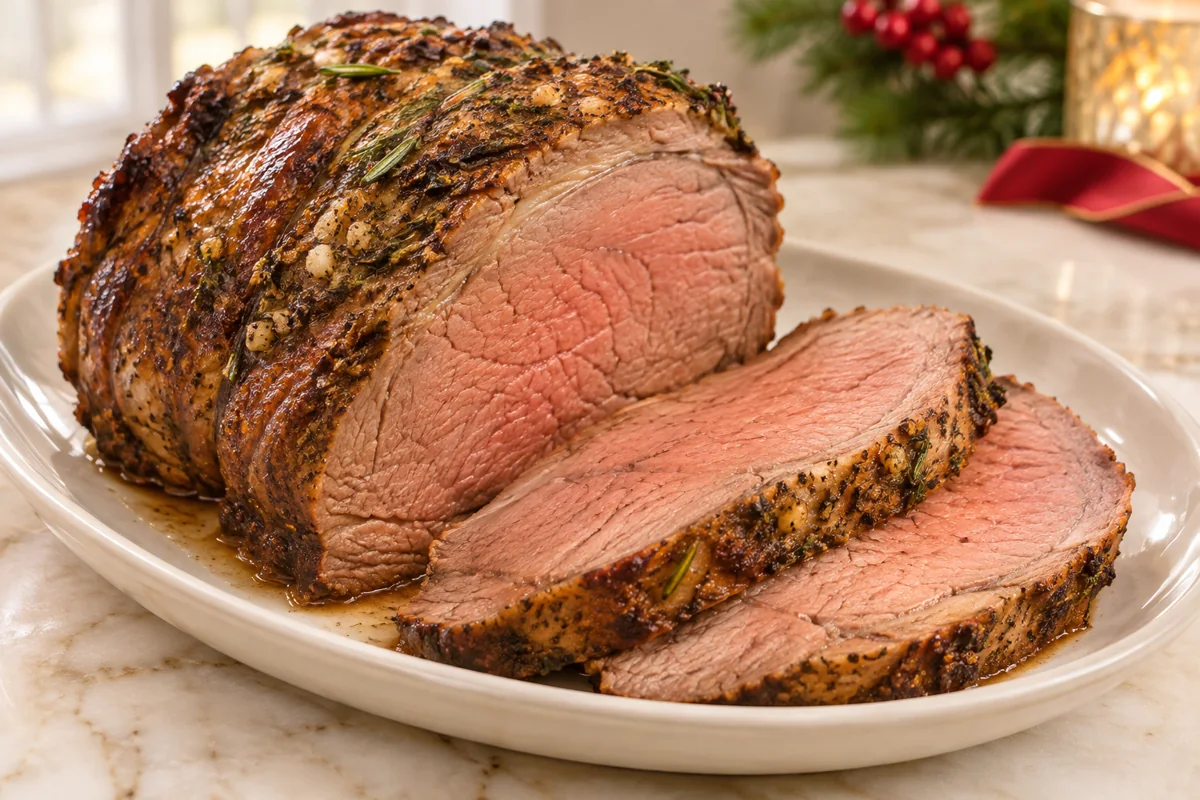
Make prime rib roast recipe with the five-step method below, measured ingredients, texture cues and a printable recipe card. Serve with measured side dishes such as roast potatoes, green beans or a fresh Christmas salad, offered separately from this seven-ingredient roast.
Quick recipe answer
For prime rib roast recipe, plan 20 minutes of preparation, 135 minutes of cooking or active heating, and 20 minutes of cooling, resting or chilling. The stated batch makes 8 servings. Follow the visual and temperature cues in the method alongside the time range, and include the resting period when planning when to serve.
On this page
Ingredients for prime rib roast recipe
For one batch of prime rib roast recipe, measure 1 boneless rib roast, 4 pounds; 2 tablespoons unsalted butter, softened; 4 garlic cloves, minced; 1 tablespoon chopped fresh rosemary; 2 teaspoons chopped fresh thyme; 2 teaspoons kosher salt; 1 teaspoon ground black pepper. The complete card repeats these quantities for convenient cooking; keep any divided portions separate until their step.
The recipe uses a boneless four-pound rib roast. Bone-in roasts, unusually flat cuts and much larger roasts need their own timing decisions. Use the thermometer to judge the center rather than multiplying minutes per pound as if every shape heated identically.
The initial high heat develops the surface; the lower setting carries the roast through the main cooking period. Do not keep the oven at 450°F for the full time. Avoid frequent door opening, which makes the oven recover heat repeatedly.
Kosher salt varies in crystal size by brand, so the measured two teaspoons are an intentionally restrained starting amount. The rub contains no stock cube, soy sauce or other hidden salty ingredient. Garlic and herbs should be finely chopped so the butter spreads evenly.
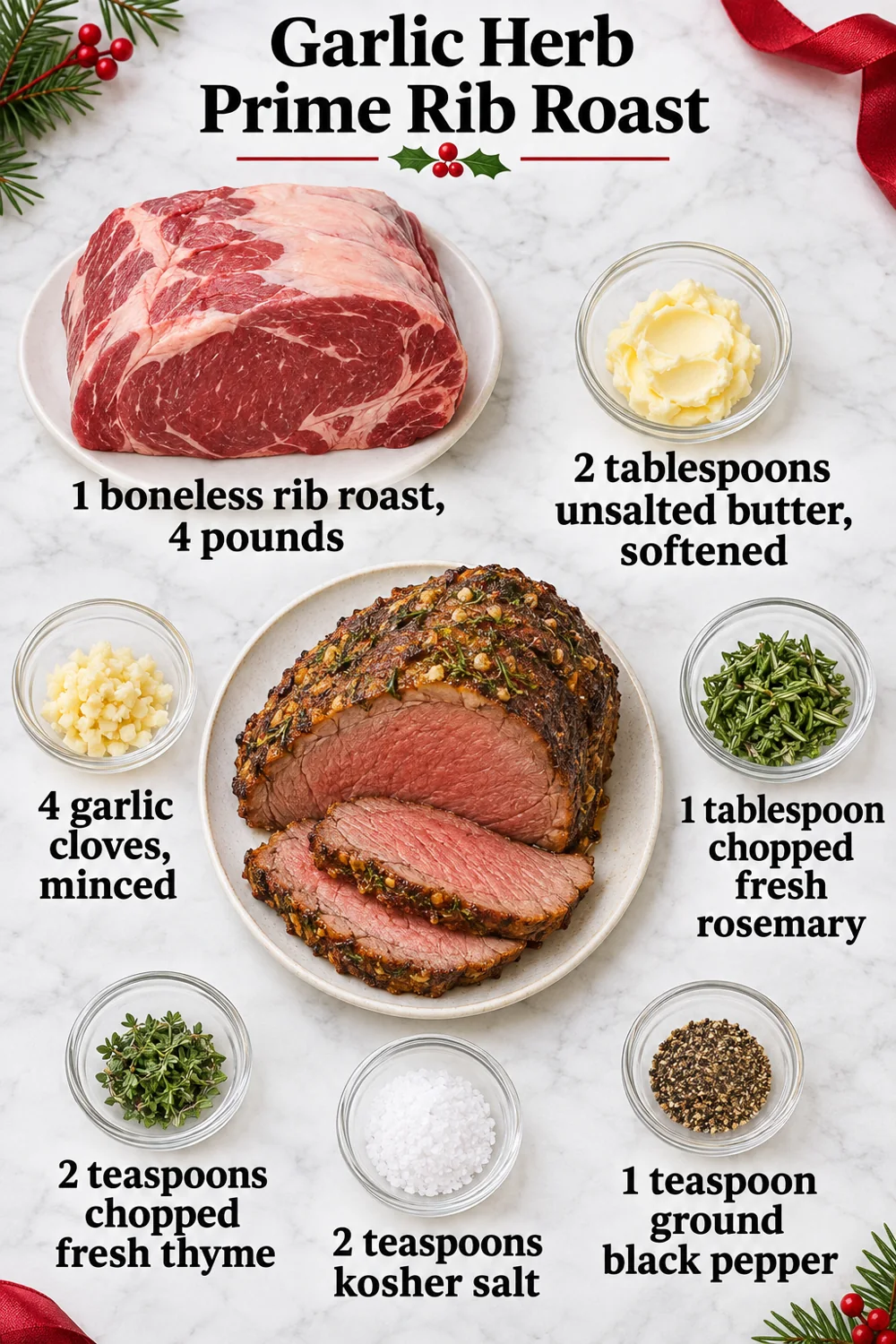
How to make prime rib roast recipe
The prime rib roast recipe method is written in connected steps here as well as in the final recipe card. Read all five steps before starting so the next ingredient, pan or cooling space is ready when needed.
Step 1
Thaw the roast completely in the refrigerator if frozen. Heat the oven to 450°F (230°C). Pat the roast dry with paper towels and place fat-side up on a rack in a roasting pan. Do not wash raw beef.
Step 2
Mix butter, garlic, rosemary, thyme, kosher salt and pepper. Spread over the outside of the roast. Insert an oven-safe thermometer into the thickest central part, avoiding the pan and any pockets of fat.
Step 3
Roast for 15 minutes at 450°F (230°C), then reduce the oven to 325°F (165°C). Continue roasting, beginning temperature checks after about 75 additional minutes. A 4-pound boneless roast may need about 90–120 additional minutes; shape and starting temperature affect the time.
Step 4
Continue cooking until the center reaches at least 145°F (63°C), the minimum used in this recipe for a whole beef roast. Verify with a thermometer in more than one central spot rather than judging only by surface color. Remove the pan carefully.
Step 5
Transfer to a carving board and rest for 20 minutes, loosely tented with foil, before slicing across the grain into eight portions. Keep the resting juices contained. This recipe uses a fully cooked roast target rather than a rare-beef temperature.
Planning prime rib roast recipe
Confirm the cut, weight and whether the roast is boneless before following the timing guide. Bone-in and unusually thick roasts do not cook on the same timetable as this specified piece. Set the roast on a stable rack in a pan that catches drips, and clear a separate heatproof space for resting it after cooking.
Position the thermometer tip in the center of the thickest part, away from the pan and any large fat pocket. Check more than one spot near the end. An attractive browned surface cannot tell you the center temperature. Follow the written safe endpoint rather than removing the roast early solely to obtain a redder photograph.
After cooking, move the roast with sturdy utensils and allow its resting period before slicing. Keep raw preparation boards separate from the clean carving board. Slice only what is needed for the meal and refrigerate remaining portions promptly in shallow containers. Do not leave a large roast on the table throughout a long gathering.
Work backward from serving time, reserving the full cooking and resting period before arranging other oven dishes. Measure and prepare ingredients ahead where the method allows, but keep perishable components refrigerated. If another recipe needs a different oven temperature, schedule it in a separate slot rather than changing this recipe’s heat midway through cooking.
Prime rib roast recipe: texture tips
If the outside darkens before the center reaches temperature, cover the darkest portion loosely with foil and continue at 325°F. A darker crust is not evidence that the center is safely cooked. Read the thermometer away from the surface.
If thermometer readings differ greatly, check several central locations and avoid a large fat seam. A leave-in probe is useful, but a separate instant-read check can confirm placement. Do not carve the roast open repeatedly to inspect its color.
Rest the roast on a board with a channel or inside a shallow dish. A flat board without an edge can send hot juices across the counter. Use a sharp carving knife and steady the roast safely rather than pressing hard with a dull blade.
Storing prime rib roast recipe
Refrigerate sliced leftovers in shallow covered containers within two hours and use within three to four days. Freeze portions up to one month for a practical meal plan. Reheat leftovers to 165°F (74°C). Do not leave a large roast on the counter to cool overnight.
For perishable ingredients, keep the refrigerator at 40°F (4°C) or below and limit time at room temperature to two hours, or one hour above 90°F (32°C). Use clean utensils and follow ingredient labels. See FoodSafety.gov’s preparation guidance for the general handling principles behind a safe holiday cooking routine.
Serving prime rib roast recipe
Serve with measured side dishes such as roast potatoes, green beans or a fresh Christmas salad, offered separately from this seven-ingredient roast. Eight servings is a planning yield for a four-pound boneless roast, not a fixed cooked weight per plate. Rest before carving so the presentation stays controlled.
Tools used in this recipe
For prime rib roast recipe, set out: roasting pan with rack, instant-read or leave-in food thermometer, carving board, sharp knife. Check the pan dimensions and clear a heatproof working surface before beginning. Having the correct pan or serving bowl ready avoids transferring a hot or partially mixed recipe halfway through the method.
Measure small ingredients with proper measuring spoons rather than an eating spoon. Level dry measures and read liquid measures at eye level. Keep one clean spatula or spoon aside for the finished food, especially if another utensil touched raw ingredients. A small written checklist helps when making more than one holiday recipe at the same time.
The equipment list describes tools needed for the method; it is not a requirement to buy a particular brand. The Crispe Kitchen cooking guides are a useful place to continue planning the rest of the meal. Use the original batch size when working out oven or refrigerator space, even if you later divide the finished portions into smaller servings.
Ask for a four-pound boneless rib roast when shopping. A bone-in roast, two smaller roasts or a different beef cut changes the relationship between weight, thickness and cooking time. Keep the wrapping information so you can confirm what you bought. The recipe uses a hot initial stage for surface browning followed by a lower oven temperature; it does not use an oven-off holding method or a minutes-per-pound promise.
For this preparation, cook the center to 145°F (63°C) and allow the full written 20-minute rest, which exceeds the three-minute minimum rest for whole beef cuts. Check more than one central location with a clean thermometer. Do not pull the roast at a lower temperature merely to aim for a dramatic red center. The appearance of beef can vary, so temperature and handling are more useful than copying an illustration’s color.
Questions about prime rib roast recipe
Can I cook this to a rare center?
This written method uses at least 145°F with a rest, following the standard whole-beef safety guidance. It does not instruct cooking to a lower rare temperature. Keep the temperature target explicit rather than describing a lower-temperature roast as the same recipe.
Can I use a bone-in roast?
A bone-in roast changes weight, shape and thermometer placement. The same herb flavors can be used as inspiration, but the stated timing is for a four-pound boneless roast. Always place the probe in the thickest meat rather than against bone.
Why is a thermometer necessary?
Surface browning and time do not reliably show the central temperature of a thick roast. A food thermometer makes the target measurable. Start checking early enough to avoid overshooting, but keep cooking until the center meets the stated safe target.
Does four pounds mean four pounds after cooking?
No. It is the raw shopping weight of the boneless roast. Cooking causes moisture and fat loss, and the final sliced weight will be lower. The eight-serving yield is a menu-planning guide for this piece with accompanying dishes. If buying a roast with bones, do not assume that the same total package weight contains the same amount of boneless meat.
Where should I put the thermometer?
Place its sensing area in the center of the thickest part, avoiding the pan and large pockets of fat. Check another nearby central spot if the first reading seems inconsistent. Follow the thermometer manufacturer’s instructions for insertion depth. A probe touching metal or sitting close to the exterior can give a reading that does not represent the center you need to assess.
Can I carve the roast as soon as it leaves the oven?
Allow the specified rest first on a clean carving surface that can catch juices. The rest is included in the serving timetable and gives you time to finish side dishes without repeatedly moving the roast. Use clean carving utensils rather than the board or tongs used for raw preparation. Refrigerate remaining beef promptly in shallow portions instead of leaving the entire roast warm for hours.
Find this recipe in 6 Christmas Dinner Main Dishes for a Festive Table.
Garlic Herb Prime Rib Roast
Yield: 8 servings
Prep: 20 minutes · Cook/heating: 135 minutes · Cooling/rest/chilling: 20 minutes
Equipment: roasting pan with rack, instant-read or leave-in food thermometer, carving board, sharp knife
Ingredients
- 1 boneless rib roast, 4 pounds
- 2 tablespoons unsalted butter, softened
- 4 garlic cloves, minced
- 1 tablespoon chopped fresh rosemary
- 2 teaspoons chopped fresh thyme
- 2 teaspoons kosher salt
- 1 teaspoon ground black pepper
Instructions
- Thaw the roast completely in the refrigerator if frozen. Heat the oven to 450°F (230°C). Pat the roast dry with paper towels and place fat-side up on a rack in a roasting pan. Do not wash raw beef.
- Mix butter, garlic, rosemary, thyme, kosher salt and pepper. Spread over the outside of the roast. Insert an oven-safe thermometer into the thickest central part, avoiding the pan and any pockets of fat.
- Roast for 15 minutes at 450°F (230°C), then reduce the oven to 325°F (165°C). Continue roasting, beginning temperature checks after about 75 additional minutes. A 4-pound boneless roast may need about 90–120 additional minutes; shape and starting temperature affect the time.
- Continue cooking until the center reaches at least 145°F (63°C), the minimum used in this recipe for a whole beef roast. Verify with a thermometer in more than one central spot rather than judging only by surface color. Remove the pan carefully.
- Transfer to a carving board and rest for 20 minutes, loosely tented with foil, before slicing across the grain into eight portions. Keep the resting juices contained. This recipe uses a fully cooked roast target rather than a rare-beef temperature.
Recipe notes
The recipe uses a boneless four-pound rib roast. Bone-in roasts, unusually flat cuts and much larger roasts need their own timing decisions. Use the thermometer to judge the center rather than multiplying minutes per pound as if every shape heated identically.