
Sugar Cookie Cheesecake: 5 Easy Steps
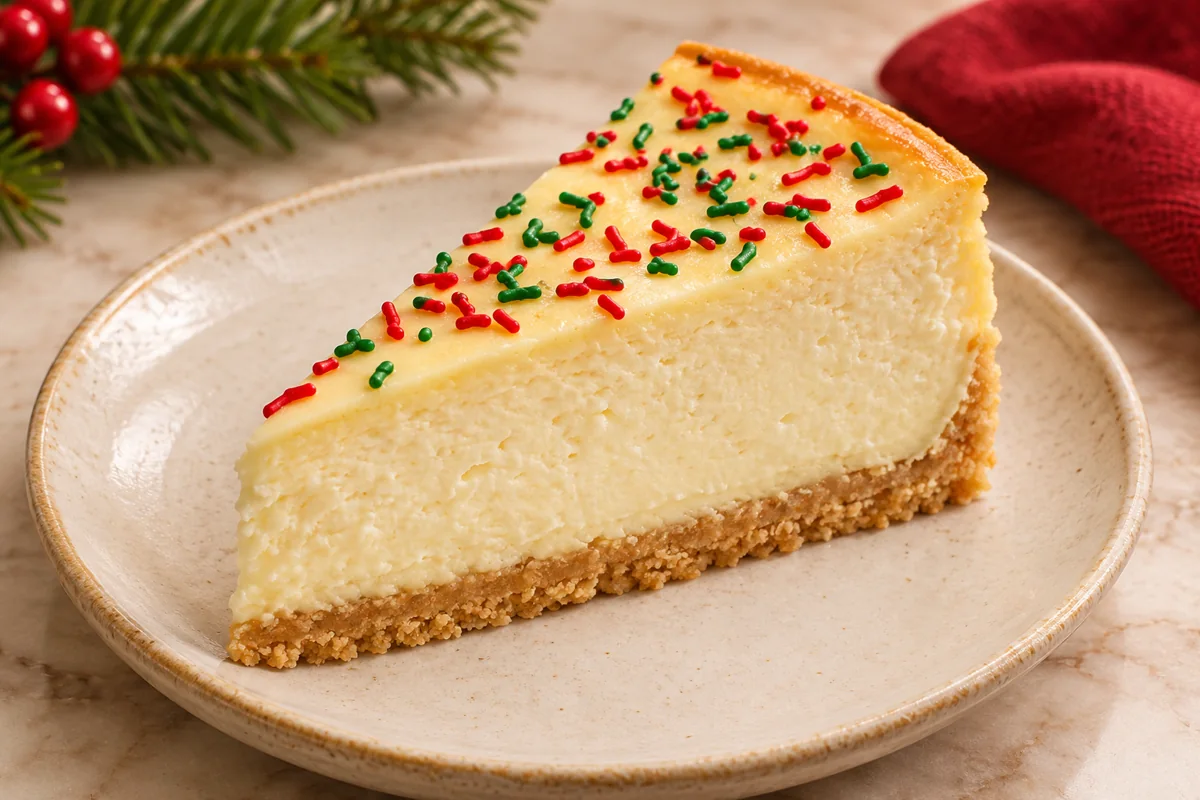
Make sugar cookie cheesecake with the five-step method below, measured ingredients, texture cues and a printable recipe card. Serve small slices as part of a Christmas dessert table, with the red-and-green decoration added just before presentation.
Quick recipe answer
For sugar cookie cheesecake, plan 30 minutes of preparation, 75 minutes of cooking or active heating, and 420 minutes of cooling, resting or chilling. The stated batch makes 12 slices. Follow the visual and temperature cues in the method alongside the time range, and include the resting period when planning when to serve.
On this page
Ingredients for sugar cookie cheesecake
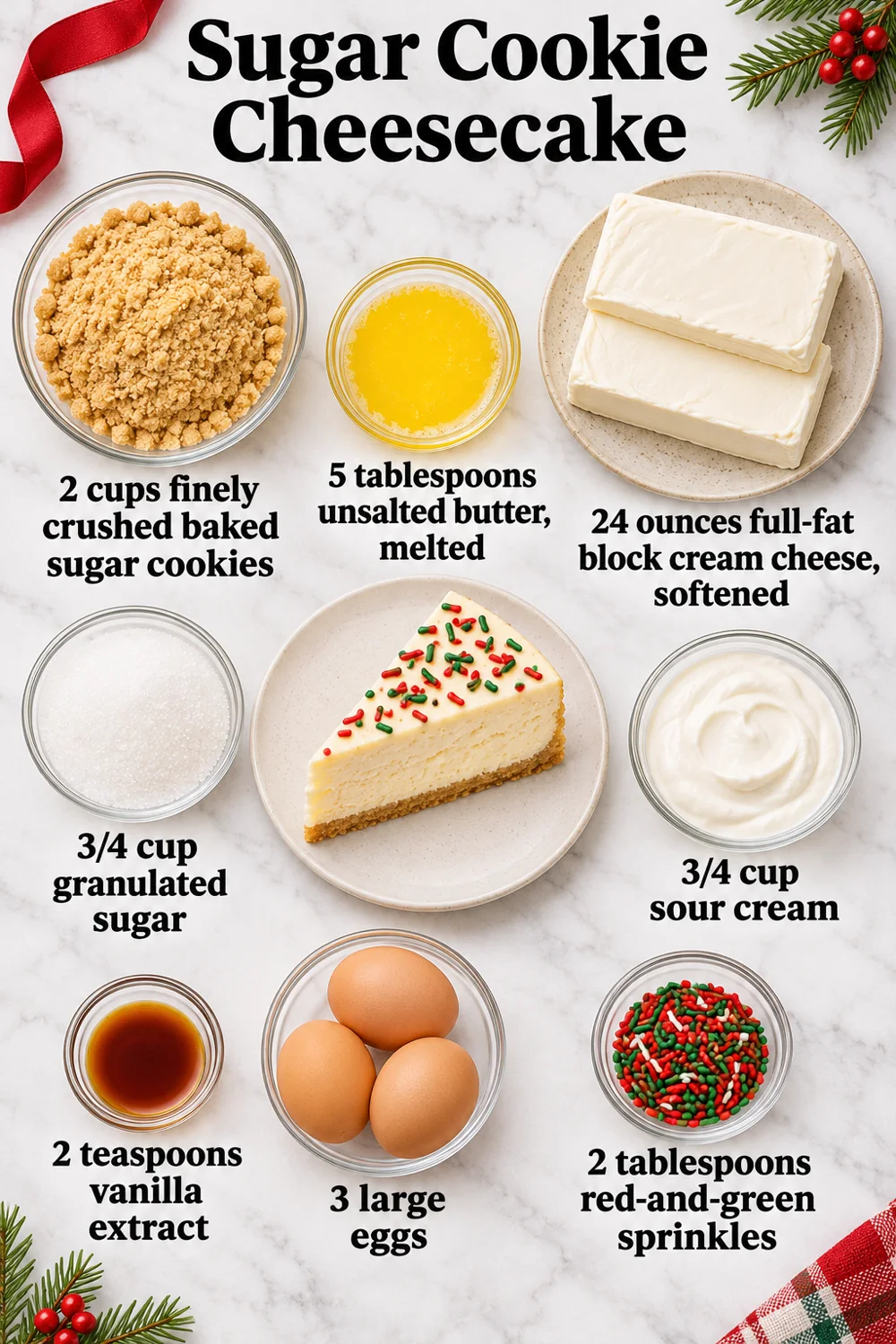
For one batch of sugar cookie cheesecake, measure 2 cups finely crushed baked sugar cookies; 5 tablespoons unsalted butter, melted; 24 ounces full-fat block cream cheese, softened; 3/4 cup granulated sugar; 3/4 cup sour cream; 2 teaspoons vanilla extract; 3 large eggs; 2 tablespoons red-and-green sprinkles. The complete card repeats these quantities for convenient cooking; keep any divided portions separate until their step.
Use fully baked sugar cookies for the crust, not raw cookie dough or untreated flour. Finely ground crumbs bind more evenly with butter than large broken pieces. The finished crust should hold together when pressed but should not pool melted butter.
Block cream cheese gives a firmer filling than spreadable cream cheese from a tub. Let it soften enough to blend smoothly before mixing. Cold hard lumps are difficult to remove after the eggs have been added without beating excess air into the batter.
This version contains a baked cookie crust and a plain vanilla cheesecake filling; it does not contain raw dough balls. The sprinkles are a decoration added to the chilled surface. Keeping them out of the batter avoids a streaked filling when colored sugar dissolves.
How to make sugar cookie cheesecake
The sugar cookie cheesecake method is written in connected steps here as well as in the final recipe card. Read all five steps before starting so the next ingredient, pan or cooling space is ready when needed.
Step 1
Heat the oven to 325°F (165°C). Place a 9-inch springform pan on a baking sheet. Mix the baked-cookie crumbs with melted butter, press firmly across the pan base and bake for 10 minutes. Let the crust cool while preparing the filling.
Step 2
Beat the softened cream cheese and sugar on low to medium speed until smooth, scraping the bowl. Mix in the sour cream and vanilla. Add the eggs one at a time on low speed, stopping as soon as each is incorporated.
Step 3
Pour the filling onto the cooled crust and smooth the top. Bake on the center rack for 50–65 minutes, until the outer portion is set and the center moves as one gentle wobble rather than a liquid ripple. Avoid opening the oven repeatedly.
Step 4
Switch the oven off, prop the door slightly open and leave the cheesecake inside for 30 minutes. Move it to a rack for another 30 minutes, then refrigerate. Keep total time outside refrigeration within two hours after baking.
Step 5
Refrigerate for at least 6 hours, preferably overnight, until fully chilled. Run a thin knife around the edge, release the springform ring, and add sprinkles before serving. Slice into 12 portions with a clean knife dipped in hot water and wiped dry between cuts.
Planning sugar cookie cheesecake
Build the holiday timetable around chilling, not only oven time. Clear a level shelf in the refrigerator before starting, and choose a serving plate that supports the full base. A cake that can be moved while warm is not necessarily ready to slice. Keep the springform ring attached through cooling and chilling so the filling and crust stay supported.
Bring the cream cheese to a workable softness during preparation rather than trying to remove cold lumps after adding eggs. Scrape the bowl with a flexible spatula and check its bottom, where dense cheese can remain. Low-speed mixing after the eggs limits unnecessary air. Avoid repeated tasting of uncooked filling because it contains raw eggs.
Watch the central movement and set outer portion rather than treating a darker surface as the only sign of doneness. Open the oven gently and nudge the pan only a little. Follow the short cooling sequence and refrigerate within the stated food-safety window. Add decorations after chilling, when the surface is firm enough to support them.
Prepare this dessert the day before the meal when possible. That leaves the oven free on the holiday itself and avoids trying to shorten a chilling period. Make sure the refrigerator can hold the full pan level without balancing it on another container. Plan to transport the cold cake in a cooler rather than letting it warm during a long journey.
Sugar cookie cheesecake: texture tips
A cracked top can result from excess air, overbaking or rapid cooling. Mix on low once the eggs are added and stop when incorporated. The cooling sequence slows the temperature change, but a smooth uncracked surface is not something to guarantee in every oven.
If the middle ripples like liquid when the pan is nudged, it needs more baking. A small unified wobble is different from a fluid center. If the edges brown early, check the oven temperature and move the pan away from the top element.
Do not release the pan while the cake is warm. Chilling allows the filling to firm and protects the crust from breaking apart. A knife wiped between cuts keeps crumbs and filling from smearing across the next slice.
Storing sugar cookie cheesecake
Refrigerate covered and use within four days. Freeze chilled individual slices for up to one month, wrapped well. Thaw in the refrigerator. Keep the cheesecake cold until serving, and return the remaining cake promptly to refrigeration.
Keep uncooked dough and batter separate from ready-to-eat food, and do not taste them before baking. The FDA explains why raw flour and dough need proper cooking. Wash bowls and tools that touched raw egg or flour before using them to serve the finished recipe.
Serving sugar cookie cheesecake
Serve small slices as part of a Christmas dessert table, with the red-and-green decoration added just before presentation. A flat cake stand supports the crust better than a deep bowl. The twelve-slice yield is a cutting guide; thinner slices will stretch the cake further.
Tools used in this recipe
For sugar cookie cheesecake, set out: 9-inch springform pan, baking sheet, mixer, food processor or rolling pin, rack. Check the pan dimensions and clear a heatproof working surface before beginning. Having the correct pan or serving bowl ready avoids transferring a hot or partially mixed recipe halfway through the method.
Measure small ingredients with proper measuring spoons rather than an eating spoon. Level dry measures and read liquid measures at eye level. Keep one clean spatula or spoon aside for the finished food, especially if another utensil touched raw ingredients. A small written checklist helps when making more than one holiday recipe at the same time.
The equipment list describes tools needed for the method; it is not a requirement to buy a particular brand. The Crispe Kitchen cooking guides are a useful place to continue planning the rest of the meal. Use the original batch size when working out oven or refrigerator space, even if you later divide the finished portions into smaller servings.
The cookie ingredient is already baked and crushed before the crust is mixed. This gives a crumb base that can be pressed into the pan with melted butter; it is not a layer of raw sugar-cookie dough. Break up large crumbs so the crust is even, then press firmly without turning it into a hard compressed wall. Use the specified springform size so the filling depth matches the baking instructions.
Plan a full refrigerator rest of at least six hours after the short cooling stages. The listed cooking allowance includes the crust bake and the upper end of the filling bake. Chilling is separate from cooking and cannot be replaced by a few minutes in a freezer. A holiday dessert made the previous day is easier to slice neatly because the filling has time to firm throughout, not only at its outside edge.
Questions about sugar cookie cheesecake
Is there raw cookie dough in the filling?
No. This version uses baked sugar-cookie crumbs in the crust and a vanilla cream-cheese filling. Raw dough is not a hidden ingredient. The finished article, ingredient image and card all describe the same baked-cookie version.
Can I use cream cheese spread?
Use full-fat block cream cheese for the stated recipe. Tub-style spreads vary in water content and stabilizers, which can make the filling less predictable. A product swap needs its own adjustment rather than an assumed equal result.
Can I serve it after two hours of chilling?
The cake needs at least six hours in the refrigerator to firm through the center. A cool surface does not mean the filling has set. Plan for an overnight rest when serving it for a holiday gathering.
Can I decorate it with raw cookie dough balls?
They are not part of this recipe. The crust uses baked cookie crumbs, and the top uses the measured sprinkles. Raw flour and raw egg are not ready-to-eat decorations. If you want a different decoration in a future variation, choose a food explicitly prepared to be eaten as served and update the ingredient list accordingly. Do not simply set unbaked dough on the chilled cheesecake.
Why do I mix gently after adding the eggs?
The cream cheese should already be smooth before the eggs go in. Gentle mixing incorporates them without beating in unnecessary air, which can expand in the oven and affect the surface as the cake cools. Scrape the bowl to find any unmixed cheese at the bottom. Do not try to remove stubborn cold lumps by whipping the egg-containing filling at high speed for several minutes.
How do I cut cleaner cheesecake slices?
Chill the cake fully and remove the ring carefully. Use a long sharp knife, wiping it clean between slices so crust crumbs and filling do not drag onto the next cut. Divide the cake into 12 portions as written rather than guessing increasingly narrow wedges at the end. Keep the remaining cake refrigerated and return it promptly after serving the portions needed for the table.
Sugar Cookie Cheesecake
Yield: 12 slices
Prep: 30 minutes · Cook/heating: 75 minutes · Cooling/rest/chilling: 420 minutes
Equipment: 9-inch springform pan, baking sheet, mixer, food processor or rolling pin, rack
Ingredients
- 2 cups finely crushed baked sugar cookies
- 5 tablespoons unsalted butter, melted
- 24 ounces full-fat block cream cheese, softened
- 3/4 cup granulated sugar
- 3/4 cup sour cream
- 2 teaspoons vanilla extract
- 3 large eggs
- 2 tablespoons red-and-green sprinkles
Instructions
- Heat the oven to 325°F (165°C). Place a 9-inch springform pan on a baking sheet. Mix the baked-cookie crumbs with melted butter, press firmly across the pan base and bake for 10 minutes. Let the crust cool while preparing the filling.
- Beat the softened cream cheese and sugar on low to medium speed until smooth, scraping the bowl. Mix in the sour cream and vanilla. Add the eggs one at a time on low speed, stopping as soon as each is incorporated.
- Pour the filling onto the cooled crust and smooth the top. Bake on the center rack for 50–65 minutes, until the outer portion is set and the center moves as one gentle wobble rather than a liquid ripple. Avoid opening the oven repeatedly.
- Switch the oven off, prop the door slightly open and leave the cheesecake inside for 30 minutes. Move it to a rack for another 30 minutes, then refrigerate. Keep total time outside refrigeration within two hours after baking.
- Refrigerate for at least 6 hours, preferably overnight, until fully chilled. Run a thin knife around the edge, release the springform ring, and add sprinkles before serving. Slice into 12 portions with a clean knife dipped in hot water and wiped dry between cuts.
Recipe notes
Use fully baked sugar cookies for the crust, not raw cookie dough or untreated flour. Finely ground crumbs bind more evenly with butter than large broken pieces. The finished crust should hold together when pressed but should not pool melted butter.