
Cranberry Sage Focaccia
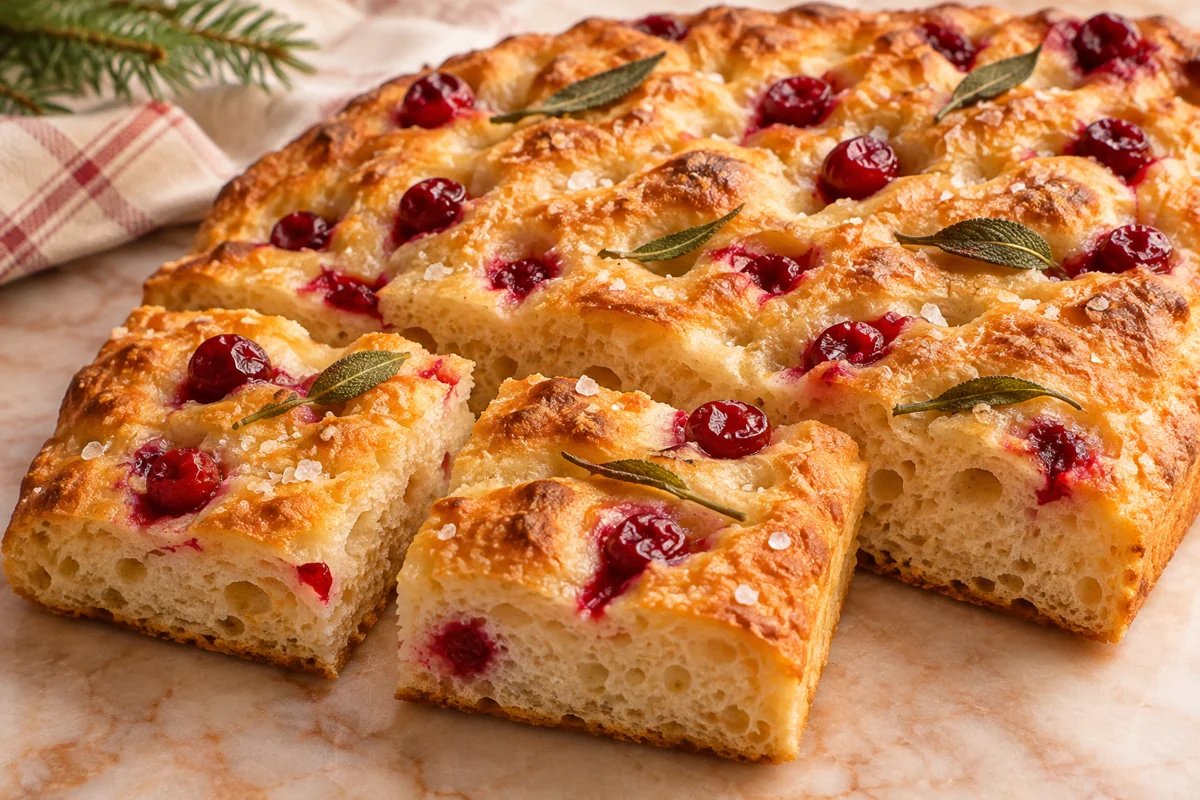
Cranberry sage focaccia: this recipe yields 12 pieces and includes 25 minutes of preparation, 25 minutes of cooking and 165 minutes for cooling or resting. Use a metal pan for stronger bottom browning; glass can change the bake.
On this page
Ingredients for cranberry sage focaccia
Measure the ingredients before starting. The quantities below are the original batch quantities; prepared weights, can sizes and divided ingredients retain their written meaning.
- 3 cups bread flour (360 g)
- 1 1/4 cups warm water
- 2 tsp instant yeast
- 1 tsp granulated sugar
- 1 tsp fine salt
- 4 tbsp olive oil, divided
- 3/4 cup fresh cranberries
- 12 small fresh sage leaves
- 1/4 tsp flaky salt
How to make cranberry sage focaccia
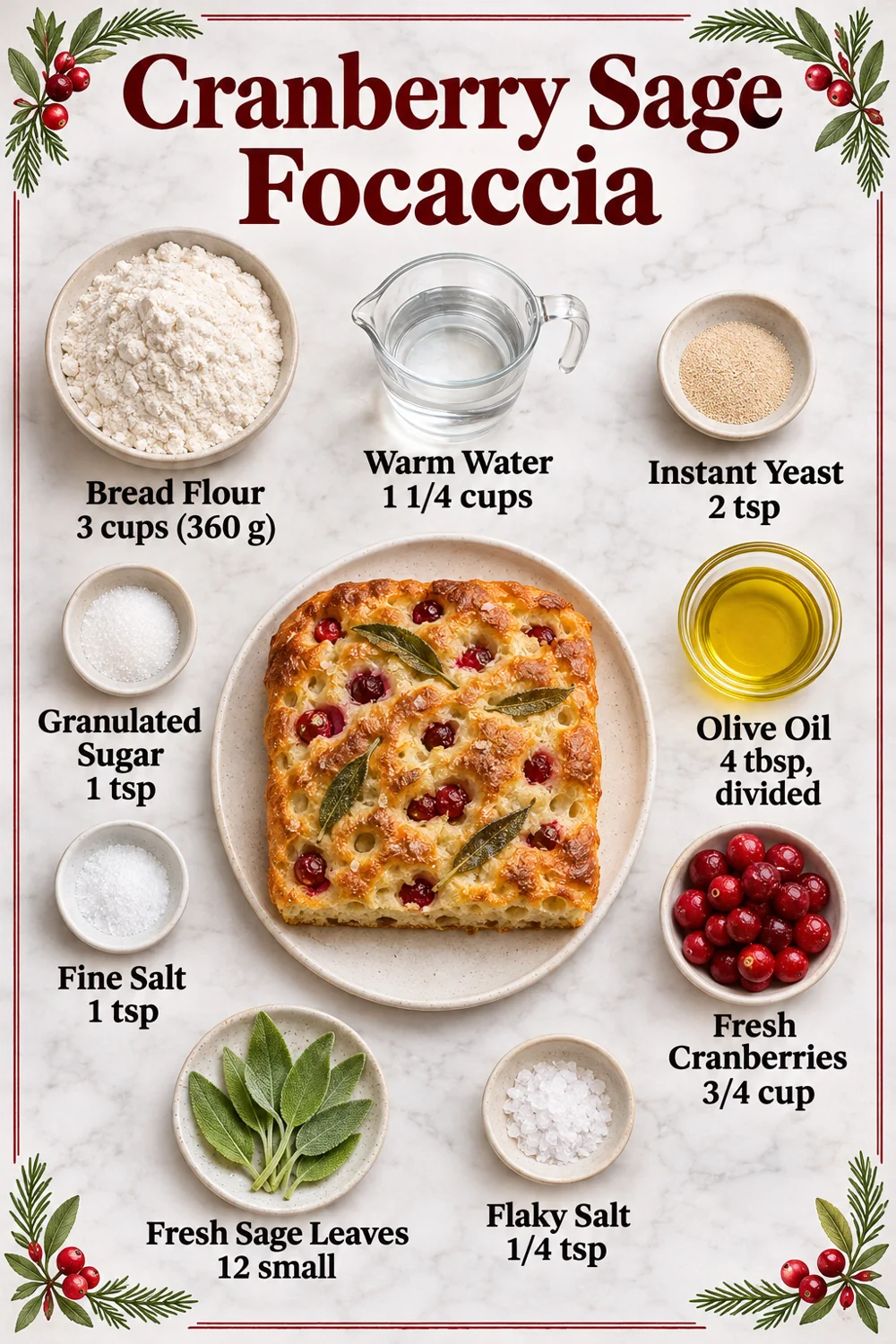
For 12 pieces of cranberry sage focaccia, measure 3 cups bread flour (360 g); 1 1/4 cups warm water; 2 tsp instant yeast; 1 tsp granulated sugar; 1 tsp fine salt; 4 tbsp olive oil, divided; 3/4 cup fresh cranberries; 12 small fresh sage leaves; 1/4 tsp flaky salt.
Mix flour, warm water, yeast, sugar, fine salt and 1 tbsp oil into a sticky dough. Cover and rise for 60–90 minutes until doubled; water should be warm, not hot enough to kill yeast.
Coat a 9-by-13-inch pan with 2 tbsp oil. Transfer the dough and gently stretch toward the corners. Rest for 15 minutes if it resists, then stretch again.
Cover and rise for 30–45 minutes until puffy. Heat the oven to 425°F toward the end of the rise.
Drizzle with the last 1 tbsp oil and dimple deeply with oiled fingertips. Press cranberries and sage lightly into the surface and sprinkle with flaky salt.
Bake for 20–25 minutes until deeply golden and the center is baked through. Cool for at least 15 minutes before slicing. Rising may take longer in a cold kitchen.
Tips for cranberry sage focaccia
Set out 9-by-13-inch metal pan, bowl, spatula. Yield: 12 pieces. Preparation: 25 minutes. Cooking: 25 minutes. Cooling, chilling or resting: 165 minutes. Total: 215 minutes.
Use a metal pan for stronger bottom browning; glass can change the bake.
The listed 165-minute rest allowance covers the longer normal rises, not an overnight proof.
Press berries into dimples so they do not roll off, but do not bury them under the dough.
Store cooled bread airtight for 2 days or freeze cut pieces for 1 month.
This is a wet focaccia dough, so work with oiled hands and the measured pan oil rather than kneading in extra flour to make it dry. Give resistant dough its short rest in the pan before stretching again. Pulling it forcefully into the corners can tear the thin patches without helping the rest of the dough relax.
Judge the rises by expansion and a puffy surface as well as the written time range. Before dimpling, make sure the dough has spread across the pan rather than remaining as a thick mound. Press the cranberries and sage lightly into the dimples, then bake until the bread is golden and its center is cooked through before slicing.
Follow the ingredient forms and preparation sizes listed for this recipe. A drained ingredient is measured after removing its liquid when the list says so; a divided ingredient is one measured total used in more than one step. Set out separate small bowls for these portions before starting, and check the recipe-specific notes above before making substitutions.
For dishes containing meat, fish or eggs, check temperature alongside the written texture cues. The FoodSafety.gov temperature chart lists minimum internal temperatures for these foods. Use a clean thermometer in the thickest portion and keep chilled components refrigerated until needed.
Questions about cranberry sage focaccia
What equipment do I need for cranberry sage focaccia?
For cranberry sage focaccia, set out 9-by-13-inch metal pan, bowl, spatula. Use the stated pan size or portion size in the method so that the timing and texture cues remain relevant.
Can I scale cranberry sage focaccia?
Scale ingredient amounts consistently, but keep the written pan dimensions, cut thicknesses, temperatures and doneness instructions. A larger batch may require additional trays or cooking rounds; multiplying ingredients does not multiply the oven temperature.
What matters most when making cranberry sage focaccia?
Use a metal pan for stronger bottom browning; glass can change the bake.
Where are the exact ingredient quantities?
Every measured ingredient is written in the ingredient list and in the complete recipe card at the end. The labelled ingredient image is an additional visual reference; you do not need to read text inside an image to follow the recipe.
Read next
Complete recipe card
Cranberry Sage Focaccia
Yield:
12 pieces
Preparation: 25 minutes. Cooking: 25 minutes. Cooling, chilling or resting: 165 minutes. Total: 215 minutes.
Equipment: 9-by-13-inch metal pan, bowl, spatula
Ingredients
- 3 cups bread flour (360 g)
- 1 1/4 cups warm water
- 2 tsp instant yeast
- 1 tsp granulated sugar
- 1 tsp fine salt
- 4 tbsp olive oil, divided
- 3/4 cup fresh cranberries
- 12 small fresh sage leaves
- 1/4 tsp flaky salt
Instructions
- Mix flour, warm water, yeast, sugar, fine salt and 1 tbsp oil into a sticky dough. Cover and rise for 60–90 minutes until doubled; water should be warm, not hot enough to kill yeast.
- Coat a 9-by-13-inch pan with 2 tbsp oil. Transfer the dough and gently stretch toward the corners. Rest for 15 minutes if it resists, then stretch again.
- Cover and rise for 30–45 minutes until puffy. Heat the oven to 425°F toward the end of the rise.
- Drizzle with the last 1 tbsp oil and dimple deeply with oiled fingertips. Press cranberries and sage lightly into the surface and sprinkle with flaky salt.
- Bake for 20–25 minutes until deeply golden and the center is baked through. Cool for at least 15 minutes before slicing. Rising may take longer in a cold kitchen.
Notes
- Use a metal pan for stronger bottom browning; glass can change the bake.
- The listed 165-minute rest allowance covers the longer normal rises, not an overnight proof.
- Press berries into dimples so they do not roll off, but do not bury them under the dough.
- Store cooled bread airtight for 2 days or freeze cut pieces for 1 month.
- This is a wet focaccia dough, so work with oiled hands and the measured pan oil rather than kneading in extra flour to make it dry. Give resistant dough its short rest in the pan before stretching again. Pulling it forcefully into the corners can tear the thin patches without helping the rest of the dough relax.
- Judge the rises by expansion and a puffy surface as well as the written time range. Before dimpling, make sure the dough has spread across the pan rather than remaining as a thick mound. Press the cranberries and sage lightly into the dimples, then bake until the bread is golden and its center is cooked through before slicing.