
Sugar Cookie Bars: 5 Easy Steps
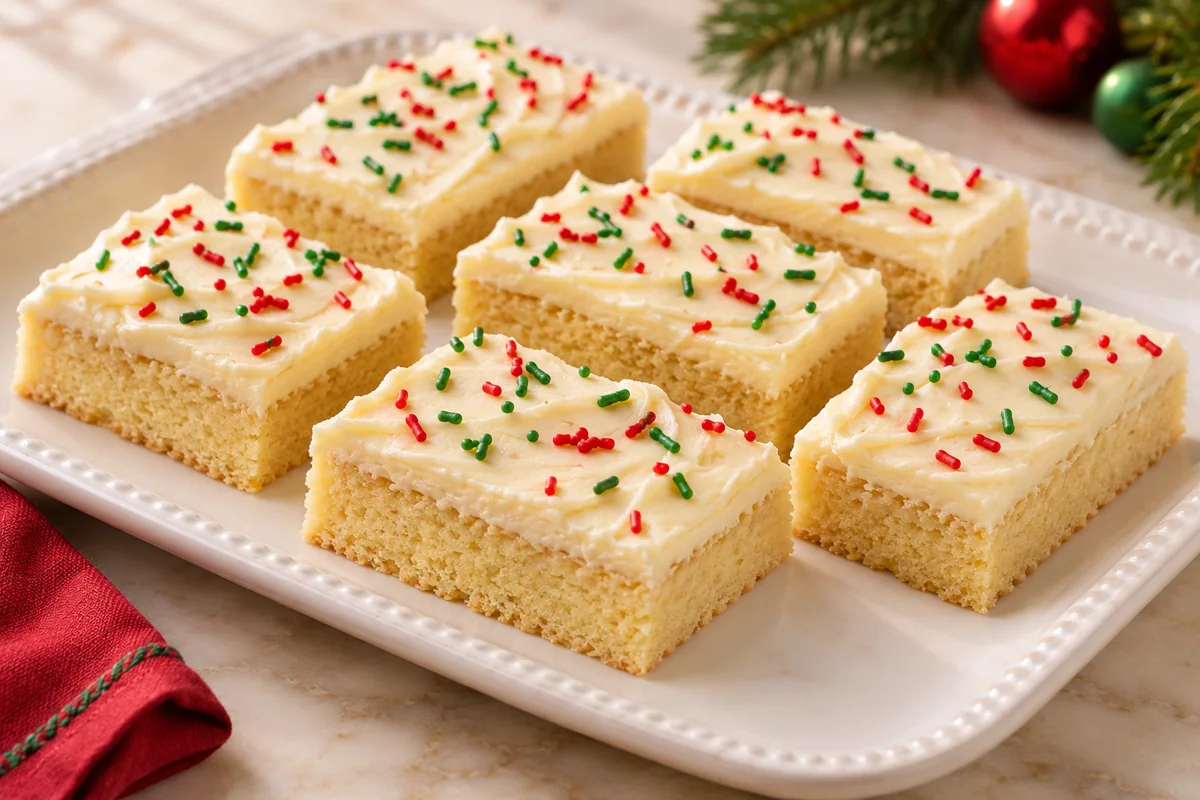
Make sugar cookie bars with the five-step method below, measured ingredients, texture cues and a printable recipe card. Cut the slab into four rows by six columns for twenty-four portions.
Quick recipe answer
For sugar cookie bars, plan 25 minutes of preparation, 22 minutes of cooking or active heating, and 90 minutes of cooling, resting or chilling. The stated batch makes 24 bars. Follow the visual and temperature cues in the method alongside the time range, and include the resting period when planning when to serve.
On this page
Ingredients for sugar cookie bars
For one batch of sugar cookie bars, measure 3/4 cup unsalted butter, softened, for the bars; 1 cup granulated sugar; 2 large eggs; 2 teaspoons vanilla extract, divided; 2 1/4 cups all-purpose flour; 1 teaspoon baking powder; 1/2 teaspoon fine salt; 1/2 cup unsalted butter, softened, for frosting; 2 cups powdered sugar; 2 tablespoons whole milk; 2 tablespoons red-and-green sprinkles. The complete card repeats these quantities for convenient cooking; keep any divided portions separate until their step.
The butter is listed in two measured portions because the bar base and frosting are mixed separately. Set out the 3/4-cup and 1/2-cup portions in different bowls. The total recipe uses 1 1/4 cups butter, but pouring all of it into the base would spoil the dough.
The vanilla is also divided: one teaspoon in the base and one in the frosting. Keep a small written checklist beside your mixing bowls if you are preparing several holiday recipes at once. Organized ingredients prevent an apparently simple tray bake from receiving doubled flavoring.
A 9 × 13-inch pan gives the stated thickness and yield. Press with the back of a spoon or clean fingertips and aim for level corners. A smaller pan makes thicker bars that need a different baking time and are harder to judge from the edges.
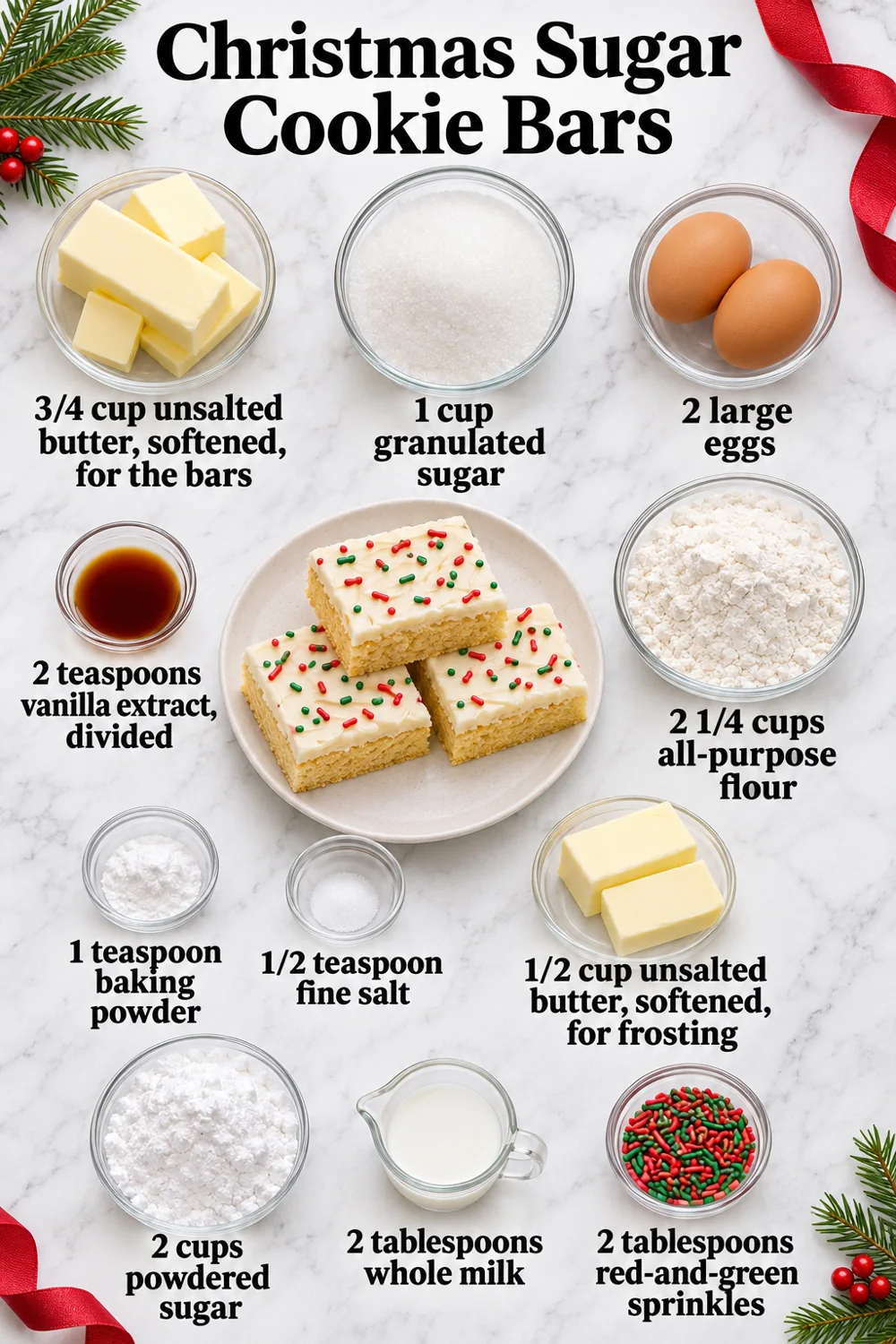
How to make sugar cookie bars
The sugar cookie bars method is written in connected steps here as well as in the final recipe card. Read all five steps before starting so the next ingredient, pan or cooling space is ready when needed.
Step 1
Heat the oven to 350°F (175°C). Line a 9 × 13-inch pan with parchment. Beat the 3/4 cup butter and granulated sugar until fluffy, then beat in the eggs one at a time and 1 teaspoon vanilla.
Step 2
Whisk flour, baking powder and salt in a bowl. Mix into the butter mixture just until a thick soft dough forms. Press into the lined pan in an even layer, including the corners, without packing the dough excessively.
Step 3
Bake for 18–22 minutes, until the edges are lightly golden and the center is set. A tester should come out without wet batter. Cool in the pan on a rack for at least 60 minutes before frosting.
Step 4
Beat the separate 1/2 cup softened butter until smooth. Add powdered sugar gradually, then the milk and remaining 1 teaspoon vanilla. Beat until spreadable, scraping the bowl so no dry sugar remains.
Step 5
Spread frosting over the cooled slab and add sprinkles. Chill for 30 minutes to firm the frosting. Lift out using the parchment and cut into 24 bars, wiping the knife between cuts. Keep the frosted bars refrigerated.
Planning sugar cookie bars
Set up the baking sheets or pan before mixing the dough or batter. Check that the oven rack is in the middle and allow the oven to finish preheating. A tray placed in a warming oven receives changing heat, so its first few minutes are not comparable to the written baking period. If you own an oven thermometer, use it to check the actual temperature rather than increasing the setting to hurry the batch.
Measure dry ingredients with a level cup and break up lumps before mixing. Keep wet and dry measuring tools separate so flour does not stick to residual butter or milk. Mix only to the stage described in each step. More beating is not automatically better once flour is added, and uneven portions do not bake at the same rate on one tray.
Use the specified doneness cues together with the time range. Start checking near the shorter end, keeping the oven door open only briefly. A cooled tray, a consistent portion size and an uncrowded oven make the next batch easier to judge. Let the finished food complete its stated cooling period before adding a coating, cutting neat pieces or packing it.
If you are making several oven recipes for a gathering, group them by oven temperature and keep the unbaked mixture at its specified holding temperature. Do not squeeze an extra sheet into a crowded oven just to save a few minutes. Leave space on a rack or heatproof surface for every hot pan before the first tray goes in.
Sugar cookie bars: texture tips
If the center looks shiny or loose at the end of the range, continue baking in short intervals until it sets. Deeply browning the entire slab is not the goal. The edges color first, while a tester and a steady center help judge the middle.
Frosting applied to a warm slab melts and slides rather than spreading into a clean layer. Wait until the pan and bars are fully cool. Chilling the frosted slab briefly makes the topping easier to cut without dragging through the crumb.
If the frosting feels stiff, beat it thoroughly before changing quantities. Powdered sugar may take a little time to absorb the measured milk. Do not add a large splash of milk at once, which can turn a spreadable buttercream into a runny glaze.
Storing sugar cookie bars
Store the frosted bars covered in the refrigerator for up to four days. For longer keeping, freeze cut portions separated with parchment for up to one month. Thaw in the refrigerator and bring out only the pieces being served.
Keep uncooked dough and batter separate from ready-to-eat food, and do not taste them before baking. The FDA explains why raw flour and dough need proper cooking. Wash bowls and tools that touched raw egg or flour before using them to serve the finished recipe.
Serving sugar cookie bars
Cut the slab into four rows by six columns for twenty-four portions. A smaller square is convenient alongside other desserts. Serve on a flat platter and keep leftover frosted bars chilled rather than leaving the entire batch on a warm buffet all afternoon.
Tools used in this recipe
For sugar cookie bars, set out: 9 × 13-inch pan, parchment, hand mixer, offset spatula, rack. Check the pan dimensions and clear a heatproof working surface before beginning. Having the correct pan or serving bowl ready avoids transferring a hot or partially mixed recipe halfway through the method.
Measure small ingredients with proper measuring spoons rather than an eating spoon. Level dry measures and read liquid measures at eye level. Keep one clean spatula or spoon aside for the finished food, especially if another utensil touched raw ingredients. A small written checklist helps when making more than one holiday recipe at the same time.
The equipment list describes tools needed for the method; it is not a requirement to buy a particular brand. The Crispe Kitchen cooking guides are a useful place to continue planning the rest of the meal. Use the original batch size when working out oven or refrigerator space, even if you later divide the finished portions into smaller servings.
Keep the two butter portions separate from the beginning: three-quarters cup belongs to the cookie base and one-half cup to the frosting. The two teaspoons of vanilla are divided between those components as specified in the method. Labeling two small preparation bowls is useful when another holiday baking project is happening nearby. Adding all the butter to the dough would leave the frosting short and make the base a different formula.
For 24 portions, mark the cooled 9-by-13-inch slab into six divisions along the long side and four along the short side. Make straight cuts after the frosting has firmed enough not to drag. Wipe the blade between cuts for a cleaner edge. The yield refers to these small rectangular bars; cutting the pan into 12 large squares gives a different serving count even though the ingredient quantities stay the same.
Questions about sugar cookie bars
Can I bake the base the day before?
Yes. Cool it completely, cover and refrigerate it before frosting the next day. The base should be cool and dry on top so the buttercream adheres. Keep the final bars refrigerated once frosted.
Why are there two butter quantities?
The larger portion belongs in the cookie base and the smaller portion belongs in the frosting. They are not alternatives. Keep them separate throughout preparation so the dough and topping each receive their intended amount.
Can I leave off frosting?
You can serve the baked base plain, but the frosting butter, powdered sugar, milk and its teaspoon of vanilla would then be omitted as a variation. The complete written recipe includes the frosting and Christmas sprinkles.
Can I frost the base while it is warm?
Wait until it is completely cool. Warmth melts the butter in the frosting, which can leave a greasy layer and cause sprinkles to slide. The cooling period is part of the timetable, not an optional pause. If the base still feels warm near the center or underside, leave it longer. Mix and cover the frosting separately while the base finishes cooling.
How do I avoid a floury or tough base?
Measure the flour level and mix only until the dough is combined after the dry ingredients go in. Do not keep beating merely to make the bowl look polished. Spread the dough evenly into the corners with a spatula so no section is much thicker than another. Check the base at the shorter end of the baking range, using the written edge and center cues together.
What is a practical way to carry the bars to a party?
Chill the frosted slab as directed, cut the portions, and place them in a rigid food-safe container. A loose bag can press against the frosting. Keep the container level and avoid leaving it in a warm car. For a buffet, arrange a smaller number on the serving tray and keep the rest covered until needed, following the stated storage guidance for the frosted bars.
Christmas Sugar Cookie Bars
Yield: 24 bars
Prep: 25 minutes · Cook/heating: 22 minutes · Cooling/rest/chilling: 90 minutes
Equipment: 9 × 13-inch pan, parchment, hand mixer, offset spatula, rack
Ingredients
- 3/4 cup unsalted butter, softened, for the bars
- 1 cup granulated sugar
- 2 large eggs
- 2 teaspoons vanilla extract, divided
- 2 1/4 cups all-purpose flour
- 1 teaspoon baking powder
- 1/2 teaspoon fine salt
- 1/2 cup unsalted butter, softened, for frosting
- 2 cups powdered sugar
- 2 tablespoons whole milk
- 2 tablespoons red-and-green sprinkles
Instructions
- Heat the oven to 350°F (175°C). Line a 9 × 13-inch pan with parchment. Beat the 3/4 cup butter and granulated sugar until fluffy, then beat in the eggs one at a time and 1 teaspoon vanilla.
- Whisk flour, baking powder and salt in a bowl. Mix into the butter mixture just until a thick soft dough forms. Press into the lined pan in an even layer, including the corners, without packing the dough excessively.
- Bake for 18–22 minutes, until the edges are lightly golden and the center is set. A tester should come out without wet batter. Cool in the pan on a rack for at least 60 minutes before frosting.
- Beat the separate 1/2 cup softened butter until smooth. Add powdered sugar gradually, then the milk and remaining 1 teaspoon vanilla. Beat until spreadable, scraping the bowl so no dry sugar remains.
- Spread frosting over the cooled slab and add sprinkles. Chill for 30 minutes to firm the frosting. Lift out using the parchment and cut into 24 bars, wiping the knife between cuts. Keep the frosted bars refrigerated.
Recipe notes
The butter is listed in two measured portions because the bar base and frosting are mixed separately. Set out the 3/4-cup and 1/2-cup portions in different bowls. The total recipe uses 1 1/4 cups butter, but pouring all of it into the base would spoil the dough.