
Christmas Salad: 5 Easy Steps
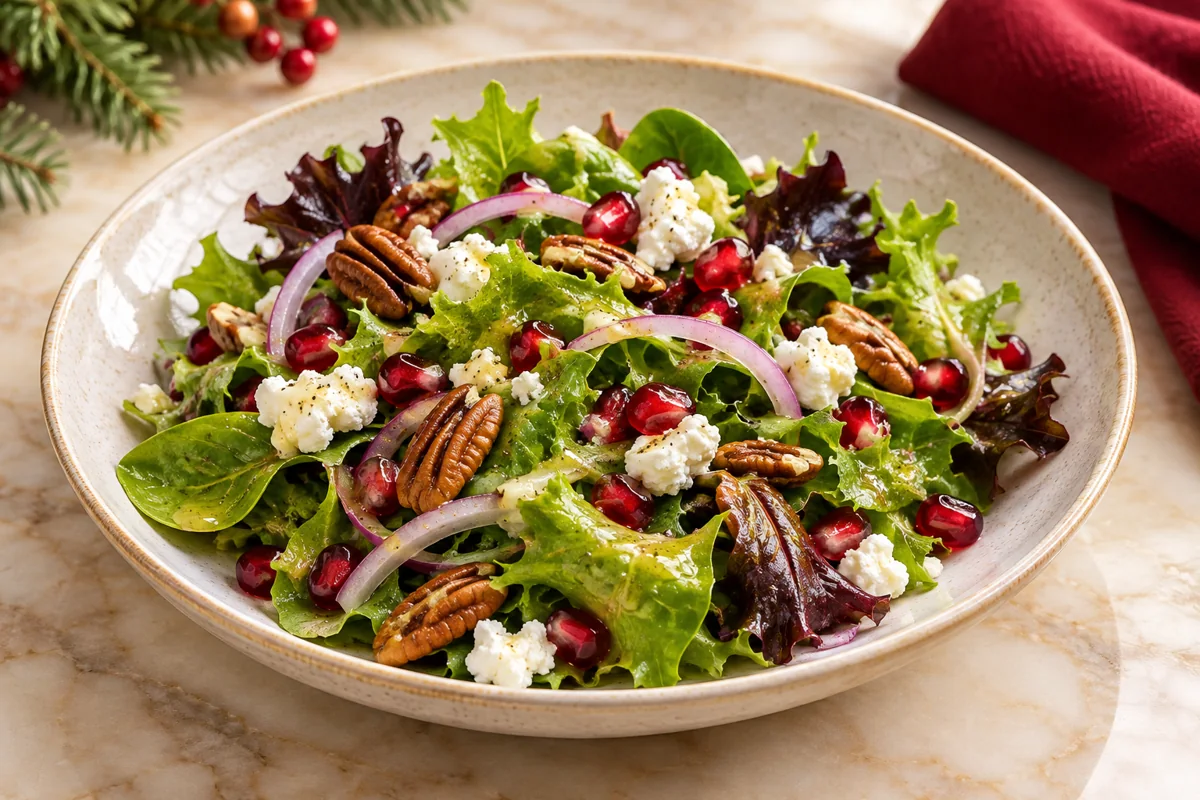
Make christmas salad with the five-step method below, measured ingredients, texture cues and a printable recipe card. Serve this as a fresh side with a roast, casserole or holiday lunch.
Quick recipe answer
For christmas salad, plan 20 minutes of preparation, 0 minutes of cooking or active heating, and 0 minutes of cooling, resting or chilling. The stated batch makes 6 side servings. Follow the visual and temperature cues in the method alongside the time range, and include the resting period when planning when to serve.
On this page
Ingredients for christmas salad
For one batch of christmas salad, measure 6 cups mixed salad greens, washed and dried; 3/4 cup pomegranate arils; 1/2 cup toasted pecans; 1/2 cup crumbled goat cheese; 1/4 cup thinly sliced red onion; 3 tablespoons extra-virgin olive oil; 2 tablespoons apple cider vinegar; 1 tablespoon honey; 1 teaspoon Dijon mustard; 1/4 teaspoon fine salt; 1/8 teaspoon ground black pepper. The complete card repeats these quantities for convenient cooking; keep any divided portions separate until their step.
Dry greens hold dressing better than leaves carrying wash water. Use a spinner or clean towels and avoid packing damp leaves into the serving bowl. Wide leafy greens can be torn into bite-size pieces before the toppings are added.
Use cooled toasted pecans so they do not wilt the greens or soften the cheese on contact. If your pecans are already toasted and salted, taste the dressing before adding more salt in a deliberate variation. The written recipe uses plain toasted pecans and a measured dressing.
Dijon helps the oil and vinegar combine while honey rounds out the tartness. The dressing may separate as it stands, which is normal. Shake it again rather than adding extra mustard merely because a layer of oil is visible.
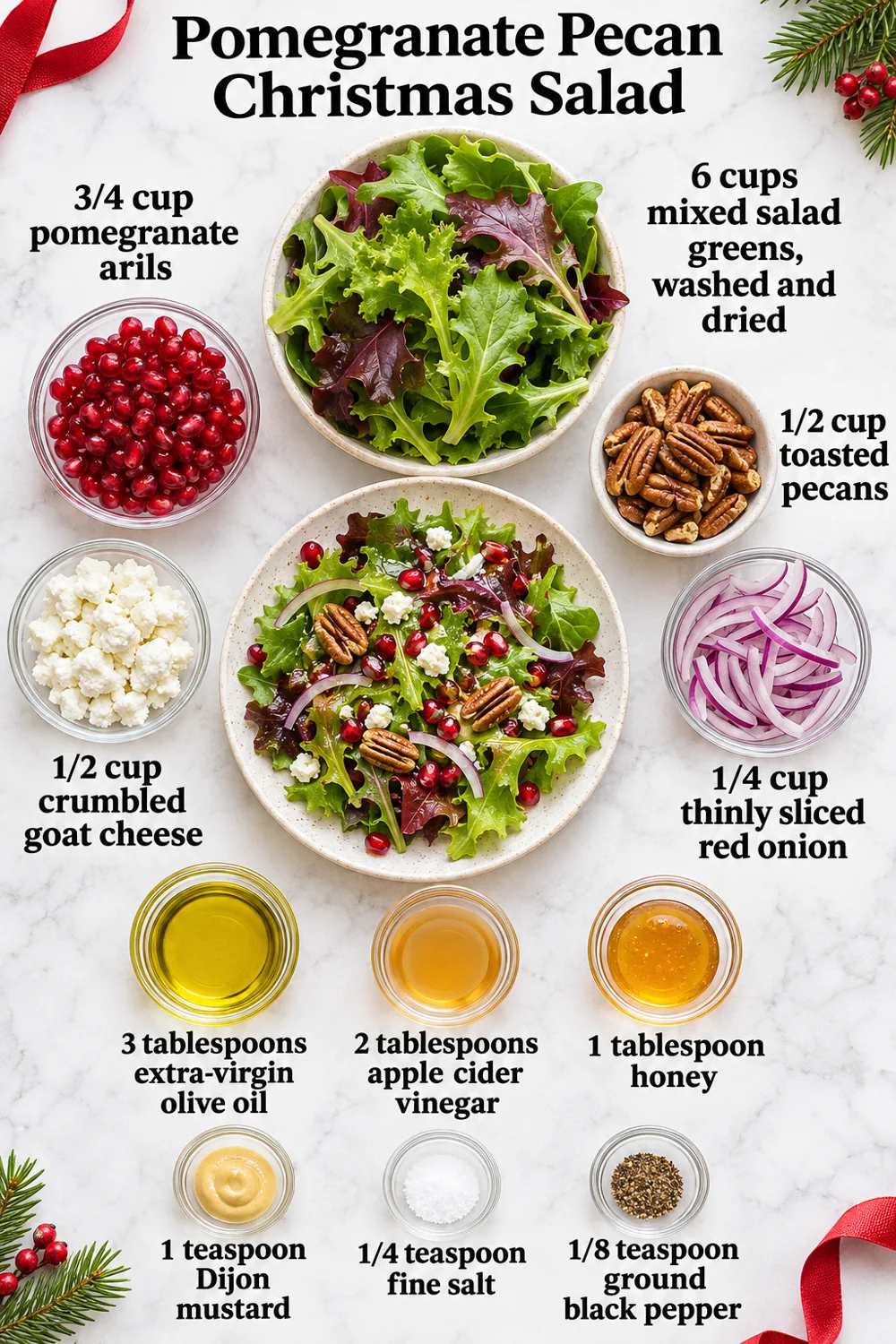
How to make christmas salad
The christmas salad method is written in connected steps here as well as in the final recipe card. Read all five steps before starting so the next ingredient, pan or cooling space is ready when needed.
Step 1
Wash and thoroughly dry the greens if they are not ready-to-eat according to the package. Sort the pomegranate arils, slice the onion thinly and allow any freshly toasted pecans to cool completely.
Step 2
Put olive oil, apple cider vinegar, honey, Dijon, salt and pepper in a small jar. Close the lid securely and shake until combined. Taste only with a clean spoon, keeping it separate from the main jar.
Step 3
Place the dry greens in a wide salad bowl. Scatter the pomegranate, cooled pecans and red onion over them, keeping the goat cheese aside until the final toss.
Step 4
Just before serving, shake the dressing again and pour about half over the salad. Toss gently, adding only enough of the remaining measured dressing to lightly coat the leaves. Hold unused dressing separately.
Step 5
Scatter the goat cheese over the dressed salad and give one gentle turn with the servers. Serve promptly as six side portions. Do not leave a dressed dairy-containing salad on the table beyond the normal food-safety window.
Planning christmas salad
Wash and dry the greens thoroughly before combining them with dressing. Water remaining on leaves dilutes the dressing and collects at the bottom of the bowl. Use a bowl large enough to turn the leaves gently instead of crushing them with a spoon. Keep nuts and cheese separate until the leaves are ready.
Mix the dressing in a small jar or bowl before pouring it over the salad. Scrape the honey and mustard into the liquid so they do not remain as concentrated streaks. Taste a dressed leaf rather than tasting only a spoonful of strong dressing. Begin with enough dressing to coat lightly; the goal is an even sheen rather than liquid pooling below.
Add delicate toppings near serving time. A salad assembled hours ahead loses contrast between crisp leaves, crunchy nuts and soft cheese. If taking it to another home, pack the dressing separately and keep the greens cold. Toss gently just before the meal, then use clean salad servers rather than hands to portion the finished bowl.
Prepare the components that keep well first and finish the texture-sensitive assembly near serving. Label any covered containers so measured ingredients are not mistaken for another recipe. Allow refrigerator space for the full batch, and choose serving vessels before guests arrive. Keep decorations and drinks separate until their final preparation step.
Christmas salad: texture tips
A watery bowl usually starts with damp greens or too much dressing. Dry leaves thoroughly and add the dressing gradually. The full measured batch is available, but the goal is a light coating, not a pool under the salad.
If the onion flavor is strong, slice it very thinly and soak the measured onion briefly in cold water, then drain and dry before adding. Do not pour onion soaking water into the salad.
If the cheese smears through the bowl, add it after the first toss and turn gently only once. A large fork and spoon or broad salad servers are easier on delicate greens than vigorous mixing with a small spoon.
Storing christmas salad
Refrigerate greens, toppings and dressing separately if preparing ahead. Assemble and dress close to serving. Use a dressed leftover salad promptly, preferably the same day, because the leaves lose texture even when kept cold; follow safe refrigeration for the goat cheese.
For perishable ingredients, keep the refrigerator at 40°F (4°C) or below and limit time at room temperature to two hours, or one hour above 90°F (32°C). Use clean utensils and follow ingredient labels. See FoodSafety.gov’s preparation guidance for the general handling principles behind a safe holiday cooking routine.
Serving christmas salad
Serve this as a fresh side with a roast, casserole or holiday lunch. The pomegranate and greens provide the Christmas colors, while pecans and goat cheese give contrasting textures. Keep the nuts and dairy clearly identified for guests.
Tools used in this recipe
For christmas salad, set out: salad bowl, small jar with lid, measuring spoons, salad servers. Check the pan dimensions and clear a heatproof working surface before beginning. Having the correct pan or serving bowl ready avoids transferring a hot or partially mixed recipe halfway through the method.
Measure small ingredients with proper measuring spoons rather than an eating spoon. Level dry measures and read liquid measures at eye level. Keep one clean spatula or spoon aside for the finished food, especially if another utensil touched raw ingredients. A small written checklist helps when making more than one holiday recipe at the same time.
The equipment list describes tools needed for the method; it is not a requirement to buy a particular brand. The Crispe Kitchen cooking guides are a useful place to continue planning the rest of the meal. Use the original batch size when working out oven or refrigerator space, even if you later divide the finished portions into smaller servings.
The red-and-green appearance comes from pomegranate arils and mixed leaves, with pale goat cheese for contrast. Measure the six cups of greens loosely rather than crushing them into the cup. Pat the washed leaves dry or use a salad spinner, then inspect the bowl for leftover water before adding dressing. Excess water weakens the honey-Dijon mixture and encourages the heavier toppings to settle into a wet layer.
Use the stated toasted pecans ready for assembly, allowing them to cool if you toast them yourself. Warm nuts can soften greens and cheese. Crumble the goat cheese into small pieces that distribute through the bowl rather than leaving one large clump. Slice the red onion thinly so it behaves as an accent. Add the pomegranate near the end and turn gently to avoid crushing the arils.
Questions about christmas salad
Can I prepare it ahead?
Wash and dry the greens, measure the toppings and mix the dressing in advance, then refrigerate them separately. Toss close to serving so the leaves remain crisp. Keep the toasted nuts dry rather than mixing them with wet fruit overnight.
Can I replace goat cheese with feta?
Feta is a reasonable deliberate variation, but it changes flavor and saltiness. Use the same measured amount only as a starting point and taste the dressing accordingly. The pictured recipe and original card use goat cheese.
Can I use bottled dressing?
You can choose a bottled dressing as a separate variation, but the measured olive oil, vinegar, honey and Dijon form the written version. Read the bottle’s ingredient label and add gradually rather than pouring a fixed bottle fraction into the bowl.
Can I put the dressing on before guests arrive?
For the crispest leaves, keep the dressing separate until close to serving. You can measure the other components and chill them in covered containers beforehand. Dress the amount you expect to serve immediately, especially at a buffet where the salad may sit for a while. Undressed reserve greens are easier to keep fresh than leftovers already coated with the acidic dressing.
What makes the dressing separate in the jar?
Oil and vinegar naturally separate on standing. The Dijon helps them combine temporarily when shaken or whisked, but the dressing is not meant to stay permanently uniform. Mix again just before using and scrape any honey from the bottom into the liquid. Pour over the leaves gradually, tossing gently so the full bowl receives a light coating rather than one wet section.
Can this serve as a main-course salad?
The written yield is six side portions. A main course would need a different portion plan and possibly additional ingredients chosen separately. Do not assume the same bowl is six complete meals simply because it contains nuts and cheese. For the Christmas menu described here, serve it beside a main dish and use the existing ingredient quantities and dressing ratio for the side salad.
Pomegranate Pecan Christmas Salad
Yield: 6 side servings
Prep: 20 minutes · Cook/heating: 0 minutes · Cooling/rest/chilling: 0 minutes
Equipment: salad bowl, small jar with lid, measuring spoons, salad servers
Ingredients
- 6 cups mixed salad greens, washed and dried
- 3/4 cup pomegranate arils
- 1/2 cup toasted pecans
- 1/2 cup crumbled goat cheese
- 1/4 cup thinly sliced red onion
- 3 tablespoons extra-virgin olive oil
- 2 tablespoons apple cider vinegar
- 1 tablespoon honey
- 1 teaspoon Dijon mustard
- 1/4 teaspoon fine salt
- 1/8 teaspoon ground black pepper
Instructions
- Wash and thoroughly dry the greens if they are not ready-to-eat according to the package. Sort the pomegranate arils, slice the onion thinly and allow any freshly toasted pecans to cool completely.
- Put olive oil, apple cider vinegar, honey, Dijon, salt and pepper in a small jar. Close the lid securely and shake until combined. Taste only with a clean spoon, keeping it separate from the main jar.
- Place the dry greens in a wide salad bowl. Scatter the pomegranate, cooled pecans and red onion over them, keeping the goat cheese aside until the final toss.
- Just before serving, shake the dressing again and pour about half over the salad. Toss gently, adding only enough of the remaining measured dressing to lightly coat the leaves. Hold unused dressing separately.
- Scatter the goat cheese over the dressed salad and give one gentle turn with the servers. Serve promptly as six side portions. Do not leave a dressed dairy-containing salad on the table beyond the normal food-safety window.
Recipe notes
Dry greens hold dressing better than leaves carrying wash water. Use a spinner or clean towels and avoid packing damp leaves into the serving bowl. Wide leafy greens can be torn into bite-size pieces before the toppings are added.